Most of you are probably aware of joint replacement procedures in humans as well as in dogs. You may have heard of total hip replacement in dogs, a surgical procedure used to improve the quality of life in dogs with hip dysplasia and osteoarthritis. A much less common procedure in dogs is ankle replacement. Recently, a dog underwent total ankle replacement at the University of Florida College of Veterinary Medicine’s Small Animal Hospital and became the first canine to have the procedure in Florida.
Small Animal Veterinary Surgery
Leo Gets a New Ankle
The patient was Leo, a seven-year-old Lab, who was experiencing lameness as a result of severe hock (ankle) arthritis. His surgeon, Dr. Stanley Kim, is one of only twelve veterinary surgeons worldwide who are trained in the surgical technique. According to UF, “The procedure involved replacing the damaged surfaces of his joint with a prosthetic implant known as the TATE Ankle, developed by BioMedtrix. The procedure is currently in clinical evaluation at a limited number of centers around the world.”
After the procedure, Leo went through a lengthy recovery period. It was about three months before he was cleared to work towards his preoperative lifestyle. Fortunately, he had a smooth recovery. And approximately five months after the procedure, Leo is back to hiking and playing fetch! You can watch a little video about Leo and his procedure here.
Stem Cell Therapy with Joint Replacement
You may be wondering, “What does this have to do with stem cell therapy?!” While joint replacement is both extensive and expensive, sometimes it is the best course of treatment for dogs with severe arthritis. At VetStem, one of our goals is to encourage veterinarians and their clients to consider stem cell therapy for arthritic dogs before the need for joint replacement arises. Of course, that is not always easy, and some cases are so bad, joint replacement may be their only option to live a normal life.
When joint replacement is deemed the best treatment option, we like to remind dog owners that stem cell therapy can be a great addition to surgery. Using stem cell therapy in conjunction with surgery may lead to reduced healing time, less pain, and less scar tissue formation. To learn more, read this previous blog about using stem cell therapy in conjunction with surgery.
If you are interested in VetStem Cell Therapy for your pet, click here to find a provider near you.
In this week’s blog, we are sharing Bella’s story. Bella, a pit bull, was approximately twelve years old when she received VetStem Cell Therapy. She was previously diagnosed with Intervertebral Disc Disease (IVDD) and pain medication, unfortunately, brought her little relief.
Intervertebral Disc Disease
IVDD is a condition in which one or several intervertebral discs in the spine bulge, resulting in pressure on the spinal cord. This pressure may result in extreme pain and possibly loss of limb function. IVDD can be a result of chronic disc degeneration or from an acute injury. Conservative treatment with pain medications and anti-inflammatories may help patients who have a gradual onset of symptoms or whose symptoms are mild. In severe cases or when there are repeated episodes, surgery may be recommended.
Bella, receiving an intravenous injection of her own stem cells via VetStem Cell Therapy
Bella’s mom, a veterinary technician at Fort Lee Animal Clinic, noticed that Bella stopped jumping on and off furniture and was restless and unable to sleep comfortably at night. After researching her options, she decided to have Bella treated with her own stem cells. Dr. Nazar Pereymybida at Fort Lee Animal Clinic agreed that Bella may benefit from stem cell therapy and Bella became his first stem cell case.
Treatment with VetStem Cell Therapy
To begin the process, Dr. Pereymybida collected fat tissue from Bella’s abdomen in a minimally invasive anesthetic procedure. The fat was aseptically packaged and shipped to the VetStem laboratory in Poway, California. Once received, VetStem lab technicians processed the fat to extract and concentrate Bella’s stem and regenerative cells. Stem cell injections were prepared and shipped back to Dr. Pereymybida. Approximately 48 hours after the initial fat collection procedure, Bella received multiple injections of her own stem cells along her paraspinal muscles as well as intravenously.
Stem cell treatment of IVDD falls under VetStem’s clinical research program for canine back pain. This program is designed to evaluate the safety and potential effectiveness of stem cells for numerous canine back conditions.
Results
Approximately two months after receiving VetStem Cell Therapy, Bella’s owner reported that her symptoms had improved! Though Bella was still on pain medications, her owner stated, “She’s now jumping on and off the bed and seems less painful and more energetic.” In addition, Bella was able to sleep comfortably through the entire night.
Unfortunately, Bella was diagnosed with cancer earlier this year. Her condition progressed rapidly and she crossed over the rainbow bridge.
While there is still more to learn about using VetStem Cell Therapy to treat canine IVDD, Bella’s case is not the only positive outcome reported. You may remember Bailee’s story from a while ago. He also received VetStem Cell Therapy for IVDD after an injury to his neck. And like Bella, Bailee also experienced a reduction in pain after treatment.
If your dog has IVDD or another painful back condition, speak to your veterinarian about the possibility of treatment with VetStem Cell Therapy. Since these conditions develop for different reasons, the stem cell protocol and outcome can vary for each dog. Any inquiries regarding treatment of similar conditions or other non-standard indications should be directed to VetStem personnel.
July 15th is National I Love Horses Day. To show our love of horses, we thought we’d share some of the VetStem employee horses in this week’s blog.
As most of you know, VetStem Cell Therapy was used in horses first, followed by dogs and later, cats. The first ever VetStem patient was a racehorse that was treated for a tendon injury that would have normally been career-ending. Since then, over 6,000 horses have had their stem cells processed at VetStem.
Horses most commonly receive stem cell treatment for tendon and ligament injuries, as well as joint issues. But some have received VetStem Cell Therapy for other conditions such as exercise induced pulmonary hemorrhage and uveitis under our clinical development department. But that’s enough from us. Now meet some of our employees’ horses!
Libby
Valor
Libby is owned by our Safety and Technical Services Veterinarian, Dr. Amber Vibert. According to Dr. Vibert, Libby is the trifecta- she’s got brains, brawn, and beauty. Libby has only been with Dr. Vibert for just over a month. You may remember last week’s blog about Dr. Vibert’s horse Valor, who unfortunately had to be put down earlier this year. Dr. Vibert describes Valor as the sweetest boy, especially with children.
Cheddar
Joey
Cheddar and Joey are owned by our customer service manager, Veronika Graydon. See what Veronika has to say about her beloved horses: Chester aka Cheddar is my daughter’s retired Criollo polo pony from Uruguay. He is a sweet 27-year-old soul who I think is truly grateful for his now very easy life. Joey is my 14-year-old Friesian Percheron mare who I have had since she was born. She has no idea that she is a giant horse (no concept of personal space) and will do anything I ask of her with a willing spirit. They are BFFs and provide me with daily comic relief.
Hello VetStemmers! It’s Dr. Amber Vibert here and I’ve taken over the blog again. In honor of it being National Farriers Week, I’d like to share with you a horse hoof case that is near and dear to my heart. The patient was my own 25-year-old, Thoroughbred horse named Valor. Valor came to me as a senior 5 years ago. He had some mild arthritis in his hocks (rear limb “ankles”), and he had back and neck stiffness that likely came from being trained as a racehorse and then a show horse in his early years. However, the condition for which I treated him with VetStem Cell Therapy remains somewhat of an enigma.
Valor
Valor’s Hoof Infections
About 3 years into owning him, he developed a deep, severe, focal infection on the underside of both of his rear hooves. Each area measured about the size of a dime in diameter and were deep enough to expose the underlying soft tissue that bled really easily when touched. The infection and inflammation extended into his heels and was super painful for him. Around this time, he also displayed reduced healing capacity for scrapes and cuts on his limbs. Now, older horses are prone to delayed healing and weaker immune system responses as a result of certain metabolic conditions, but sometimes it is the natural progression of the aging process, not unlike elderly humans. So, the first thing I did was I had him examined by his equine veterinarian. Yes, I’m a veterinarian, but my 16 years of clinical practice prior to joining VetStem was working with small animals. Horses are very different from dogs and cats!
Diagnostics and Treatments
We took x-rays of his hooves and found no evidence of a foreign body (i.e., no nails or other penetrating objects) and no draining tracts. We tested Valor for metabolic diseases, immune system diseases and infectious diseases, all of which were negative. I always made sure his living area was clean and dry. We examined and adjusted his nutrition to make sure it was balanced and providing him with appropriate ratios of proteins, carbs, vitamins, and minerals. We also took culture swabs of the focal lesions in his hooves and found a particular type of bacteria in those lesions that could be a factor. But honestly, my veterinarian was stumped as to the underlying cause. I got a second and third opinion with other veterinarians and each had their theories, but none could pinpoint a definitive cause either. So, I treated him for months with an intense regimen of oral and topical antibiotics as well as pain meds in addition to the prescription anti-inflammatory medication he was already taking for his arthritis.
Of course, I got his farrier involved as well. He too, was unsure of the nature of these wounds, as he had never seen anything like it. We tried different podiatric options such as therapeutic shoeing, hoof pads, hoof packing, regular shoeing, and no shoeing at all. I spent countless hours as directed, caring for his feet- picking, washing, soaking, medicating etc. I used Platelet Therapy locally a couple of times- I saturated medical cotton pads with his platelet concentrate (created through the Genesis CS-2 Platelet Rich Plasma Kit) and packed it into the deep lesions. It helped for a short period of time, but it was too labor intensive to do consistently. Despite all of his treatments and the heroic efforts of his wonderful farrier, the improvement was minimal.
Treatment with VetStem Cell Therapy
Then in December 2020 I collected fat tissue from an area on his rump for stem cell processing. He didn’t have a huge cell yield, so we only had one stem cell dose to start with and the rest we grew in cell culture to create more doses. He received his first injection immediately following processing via a regional perfusion (RP) injection in his lower right rear leg. Regional perfusion is an injection into a vein with a tourniquet around the limb above the injection site. The tourniquet stays on for about 30 min after the injection to allow the cells (or other drugs) to be delivered to, and stay concentrated in, all parts of the limb below it. Then approximately 4 and 8 weeks later he received doses in both rear legs, also by RP injection.
The rationale for using stem cell therapy was to reduce inflammation, reduce pain, enhance his immune system’s ability to heal, and provide antibacterial/antifungal properties to his hooves. The only other treatments he received during the time of his stem cell therapy were pain medications and daily hoof cleaning. It was so hard to be patient waiting for the cells to do their thing! But 3 months after his initial treatment, I began to see a dramatic change. The difference was amazing! As you can see from the pictures, between December 2020 and March 2021 his hoof soles became stronger, his heals were no longer swollen and painful, and the focal lesions became significantly smaller.
Sadly, we did not get a chance to see his hoof condition through to complete resolution as I had to put him down in April 2021 due to an unrelated, fast-progressing condition. However, VetStem Cell Therapy provided him with much healthier and more comfortable feet for the last few months of his life. And for this, I will be eternally grateful.
Recently, another wave of veterinary students graduated with their Doctor of Veterinary Medicine from vet schools across the United States. Our own Dr. Harman is a graduate of the prestigious University of California Davis School of Veterinary Medicine. One of his former classmates and experienced VetStem user, Dr. Bernadine Cruz of Laguna Hills Animal Hospital, was invited to be the keynote speaker at the 2021 commencement ceremony for new graduates of UC Davis School of Veterinary Medicine. Dr. Cruz discusses the many directions one can take with a DVM degree. Early in her speech, she references Dr. Harman and his path to become a veterinary regenerative medicine entrepreneur!
We truly look forward to sharing our regenerative medicine knowledge and technology with the new DVM graduates! Click the picture below to check out the commencement ceremony and Dr. Cruz’s speech.
Today is officially Take Your Dog to Work Day. We are so lucky at VetStem to have a pet friendly office. On any given day, there may be multiple dogs in our office. We can pretty much always count on Ben, Dr. Harman’s border collie, coming to work with his dad. Another regular visitor is Darby, our resident crazy Frenchie owned by customer service manager, Veronika. And while we have had cats in the office on occasion, most of our cats prefer the comfort of their own homes!
We of course love all the extra puppy snuggles here at VetStem, but there is another potential benefit too! Did you know that there is a potential correlation between bringing your dog to work and a reduction in stress levels? That’s right! In a preliminary study published in the International Journal of Workplace Health Management, scientists found that people who took their dogs to work reported lower stress throughout the day than employees without pets or those who had pets but didn’t take them to work. Pretty cool, huh?
A more recent study conducted by Nationwide Pet Insurance in partnership with the Human-Animal Bond Research Institute found that 90 percent of employees in pet friendly workplaces feel highly connected to their company’s mission, fully engaged with their work, and willing to recommend their employer to others. Additionally, more than three times as many employees at pet friendly workplaces report a positive working relationship with their boss and co-workers and are more likely to stay with a company long term. You can read more about the study findings here.
So, the next time your dog is giving you the sad puppy eyes as you get ready to leave for work, consider bringing them along. And if your employer is not pet friendly, you are always welcome to come visit our furry friends!
It’s been a while since we’ve introduced our readers to members of the VetStem team so for those of you who may be new to our page, we would love to introduce you to the VetStem co-founder and CEO, Dr. Bob Harman.
Dr. Harman received his bachelor’s degree, his Doctor of Veterinary Medicine and his Master of Preventive Veterinary Medicine from the University of California, Davis. He began his career in the dairy cow industry but then shifted his focus to new pharmaceutical development in order to help more animals. Dr. Harman started and grew multiple biotechnology companies which he eventually sold before co-founding VetStem in 2002.
Dr. Harman’s fascination with stem cells began when he attended a presentation and saw stem cells beating in a petri dish. The video, which demonstrated the ability of stem cells to differentiate into functioning cardiac cells, inspired Dr. Harman to delve deeper into the science of stem cells. He recognized the potential of stem cell therapy and the need for alternative therapeutic modalities for difficult veterinary conditions and thus, VetStem was born.
After 15+ years of experience, Dr. Harman went on to co-found the human stem cell company, Personalized Stem Cells, Inc (PSC) in 2018. (You may have read our recent blogs about PSC. If not, check out the latest update here.) But Dr. Harman didn’t stop there. Realizing he could leverage the cell manufacturing experience and expertise of the VetStem team, Dr. Harman launched a contract cell manufacturing division, Performance Cell Manufacturing (PCM). This division of VetStem provides development and manufacturing services to companies looking to bring their cell therapy products to market.
As you can see, Dr. Harman has dedicated most of his career to the development of stem cell therapy services and products. He has authored and co-authored numerous peer-reviewed articles and book chapters and he delivers regenerative medicine presentations across the globe. He also serves on the board of directors for the American College of Regenerative Medicine. He is also a founding member and Vice President of the International Association of Cellular and Regenerative Veterinary Therapies.
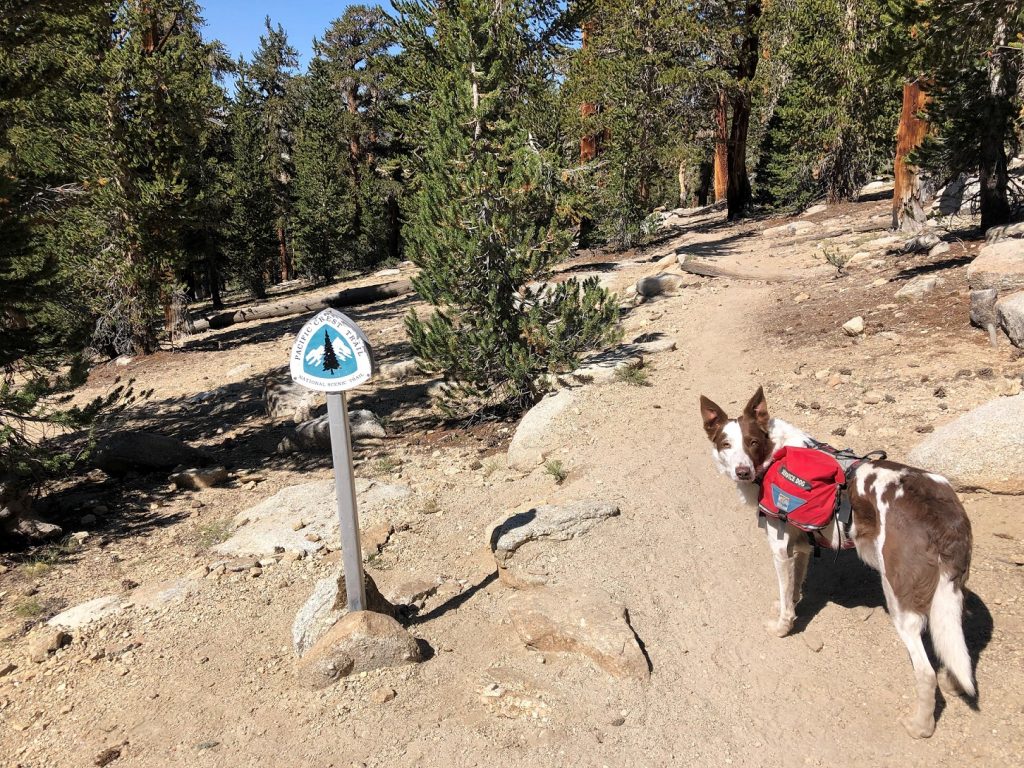
Dr. Harman with his border collie, Ben, in the Sierra Nevada Mountains
Outside of his busy professional life, Dr. Harman is an avid outdoorsman. He takes advantage of the solitude and fresh air to clear his head and regroup. He enjoys solo backpacking trips with his dog, Ben, and hikes on and off trail and through the mountains all throughout California. Dr. Harman and Sue, his wife of 45 years, live on a farm of sorts with multiple dogs, cats, birds, and horses, many of which have received treatment with VetStem Cell Therapy for various injuries and ailments. A true believer in the power of stem cell therapy, he, too, has been treated with his own stem cells for a rotator cuff injury. We truly appreciated Dr. Harman’s drive and innovation and look forward to what the future holds!
June 6th-12th is Pet Appreciation Week and to get in the spirit, we asked a few of our staff why they appreciate their animals. Read what they had to say below.
Kristi, Director of Commercial Operations: I know that no matter how bad of a day I have had, I can always count on one of my cats to come sit on my lap and make me feel needed and loved. As for my Newfie, I appreciate how great Elphie is with my kids, her loving temperament and gentle demeanor. She is also a big goofball that makes me smile daily.
Phini
Elphie
Veronika, Customer Service Manager: I have always had big dogs and did not expect to fall crazy in love with this little cow-spotted critter. She is a total joy and a source of constant comedy and is the most loving and trusting little thing. According to my son, Darby is the “completion to the family” and he loves that she is convinced she is not a small Frenchie but a giant Rottweiler.
Darby
Dr. Carolyn Wrightston, COO: Born about one month apart, these two boys are brothers from another mother. Jasper makes the greatest faces. Koda is a big lover – and totally food driven.
Koda and Jasper
Ashley, Marketing Assistant: These three fuzzy creatures love unconditionally. Willow is such a good guard dog and the cats just sleep and cuddle all day. They are so good with our rowdy toddler, despite all of her poking and prodding and attempts to ‘ride’ them.
Pius and Portia
Willow
Dr. Bob Harman, CEO: Ben is not only my hiking companion, he also serves to alert me to the presence of rattlesnakes when on the trail. He’s a great hiker and even carries all of his own supplies in his pack.
Ben
Whitney, Customer Service Representative: Although all four of my cats are great, I am really smitten with Ali’i. Every time I lay eyes on her, I am filled with delight. She is affectionate, playful, and seems to be as fond of me as I am of her. And don’t tell the other three dogs, but Duncan is my favorite canine child- he is naughty as can be, but also very much a Momma’s boy.
Ali’i
Duncan
Roberta, Account Relationship Manager: Will Roger’s said it best, “If there are no dogs in Heaven, then when I die, I want to go where they went.” That quote pretty much sums up the love and appreciation I have for my dogs. They are the most selfless, loyal, humorous, and unconditionally loving creatures I know. So, to Huggy, Mira and Trace, my four-legged best friends, in celebration of Pet Appreciation Week, I promise, I’ll buy that new kiddie pool and leave the chopped greens out of your dinner tonight.
Huggy and Mira
Trace
Dr. Amber Vibert, Safety and Technical Services Veterinarian: I appreciate Rally for the joy she brings to my life and to the lives of those she encounters. Her sweet, smart, intuitive, and playful nature fills my heart with the most pure love, translated from that joy.
Jackson is an approximately 5-year-old tripod, meaning he only has 3 legs. His right rear leg was amputated when he was only four months old, just before he was adopted from an animal shelter. Jackson got around just fine for a while, as many rear leg amputees tend to do. But when he was around 2.5 years old, he injured his left knee while playing. This was bad news for Jackson.
According to Jackson’s mom, he could barely walk after he injured his only rear leg. His owner had to help him get around by using a lift harness. His veterinarian, Dr. Nick Vitale of Heritage Animal Hospital, diagnosed him with a partially torn cruciate ligament in that left knee. Additionally, he was also diagnosed with severe osteoarthritis in his left hip and both of his elbows.
Fortunately, Dr. Vitale is an experienced VetStem user, and recommended treatment with VetStem Cell Therapy. Jackson had fat tissue collected from his abdomen and sent to the VetStem laboratory for processing. After his stem and regenerative cells were extracted and concentrated, 5 stem cell doses were shipped back to Dr. Vitale. Jackson received one injection of his own stem cells into each elbow, his left hip, his left knee, and an intravenous injection.
According to Jackson’s mom, he had a great response to the stem cell therapy. She stated, “After the therapy, he is completely back to full functioning!” It is just over three years since Jackson’s initial stem cell treatment and he has not required a retreatment. Fortunately, he still has multiple stem cell doses stored, should he need them in the future.
Jackson’s story is unfortunately not uncommon among tripods. Osteoarthritis is common in tripod dogs because their remaining limbs endure added weight and stress to make up for the missing leg. Jackson is also not the only tripod dog to benefit from VetStem Cell Therapy. Mandy is a front leg amputee who received stem cell therapy for arthritis in her hips and hocks (ankles). You can read Mandy’s story here.
Of course, we never want any dog to be in pain or lose mobility. But when it comes to tripods, keeping them “on all threes” is extra important. We are so happy VetStem Cell Therapy helped Jackson and Mandy return to their own version of normal mobility. If you think your dog may benefit from VetStem Cell Therapy, speak to your veterinarian or contact us to receive a list of VetStem providers in your area.
As most of you know, VetStem spun out a human stem cell company several years ago called Personalized Stem Cells. We like to provide occasional updates for those who may be interested, and it has been a few months since our last update. Since then, there have been some exciting developments regarding clinical trials.
Knee Osteoarthritis Clinical Trial Update
The first FDA investigational new drug approval to research stem cell use secured by Personalized Stem Cells (PSC) was for single knee osteoarthritis. The clinical trial was launched shortly before the COVID-19 pandemic. Despite the challenges presented by the pandemic, PSC was able to safely and successfully complete clinical trial enrollment and treatments by the end of 2020. 39 patients were enrolled in the clinical trial.
Since our last update, Personalized Stem Cells hit another milestone. In January, they announced that all data for the clinical trial was collected and preparations for FDA submission were taking place. And in March, PSC officially announced that all clinical trial data was submitted to the FDA. The preliminary results look very promising. PSC reported that over 79% of patients improved and there were no serious adverse events reported. With the first clinical trial under their belts, PSC plans to launch a larger, placebo-controlled trial later this year.
COVID-19 Clinical Trial Update
Since our latest PSC update blog in March, a lot has happened with the COVID-19 stem cell clinical trial. For reference, PSC developed the investigational new drug and secured FDA approval for the clinical trial shortly after the pandemic began. They went on to license the clinical trial to Sorrento Therapeutics in October 2020.
The most recent news came earlier this month when PSC announced that enrollment was complete for the COVID-19 clinical trial. The results look very promising. Ten patients received allogeneic stem cell therapy for treatment of COVID-19 induced acute respiratory distress. All ten patients were hospitalized prior to treatment and required oxygenation supplementation. And all ten patients were discharged from the hospital shortly after their final stem cell injection. Data from this clinical trial will be used to support a placebo-controlled study which is expected to take place in multiple sites in the United States as well as in Brazil.
Planned Future Clinical Trials
In addition to the phase 2 knee osteoarthritis study, PSC plans to pursue FDA approval for a traumatic brain injury (concussion) study. Stem cell therapy may provide answers and tools to address the chronic debilitation experienced by TBI victims. Recent studies by others have found that stem cells have demonstrated the ability to regenerate damaged nerve tissues which may lead to an improvement in disabilities and thereby the quality of life.
To keep up with Personalized Stem Cells, follow their blog and Facebook page.