While VetStem Cell Therapy is primarily used to treat orthopedic conditions, many patients have received stem cell therapy for alternate indications such as kidney disease, gingivostomatitis, and inflammatory bowel disease. Conditions such as these are still in the investigational stage, as there is minimal published data to demonstrate that stem cells are effective in treating these diseases.
That being said, it is well documented that stem cells have anti-inflammatory properties, which, theoretically, may make them effective at treating a wide range of inflammatory diseases and processes. One example of an inflammatory disease is feline asthma.
Asthma is defined as a chronic inflammatory process involving the tracheal, bronchi, and lung fields. Cats with asthma often have a chronic cough, acute respiratory distress, and vomiting. There is currently no cure for feline asthma so traditional treatment is focused on managing the disease with oxygen, inhalers, and steroids. As one can imagine, getting a cat to cooperate with using an inhaler is not always easy. And long-term steroid use comes with several negative side effects.
That’s where VetStem Cell Therapy comes in. Stem cells have the ability to home to areas of inflammation and down-regulate that inflammation. Not only can they control inflammatory processes, stem cells can also modulate the immune system, which may play a role in reducing the number of acute asthmatic episodes in an affected cat. Some cats have received VetStem Cell Therapy for asthma, and while much of the evidence is anecdotal at this point, we have received reports of improvement in symptoms and one case where the cat went into complete remission. That being said, we still have much to learn about using VetStem Cell Therapy to treat feline asthma. And it is important to note that every patient reacts differently to treatment with stem cells.
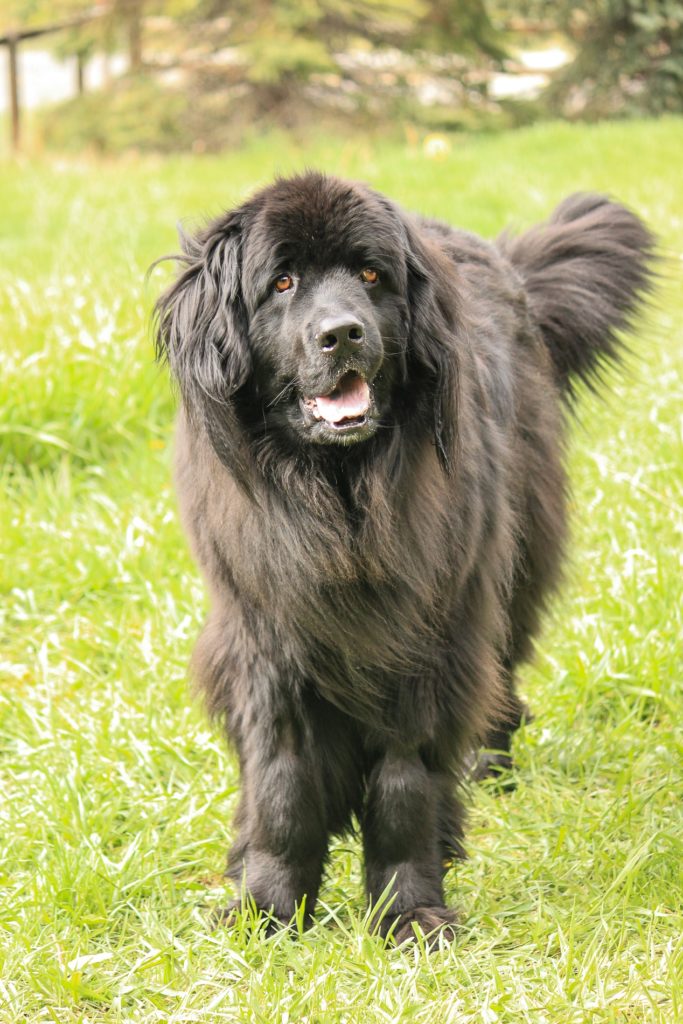
Tomorrow, March 25th, is National Newfoundland Dog Day! Newfies are a unique breed and are often as sweet and gentle as they are big! Unfortunately, like all giant breeds, Newfies are prone to orthopedic issues like osteoarthritis and cruciate ligament injuries. This was exactly the case for Ava, a 115-pound, 3-year-old Newfoundland who partially tore her cruciate ligaments in both knees.
As a mellow dog, Ava was able to recover without surgical intervention and resumed her normal activities without any noticeable pain. That being said, when Ava was approximately 6 years old, she began showing signs of pain and decreased mobility, a result of the arthritis that had developed in her knees.
Ava
Ava’s veterinarian diagnosed Ava with moderate osteoarthritis in both knees and recommended treatment with VetStem Cell Therapy. Ava’s owner agreed, stating, “I have grown up with horses and had seen success stories of using stem cells to help ligament and tendon tears…and started researching VetStem. After all, a Newfoundland is really a mini pony.”
To begin the VetStem process, Ava’s veterinarian collected fat from her abdomen in a minimally invasive anesthetic procedure. The fat was aseptically packaged and shipped to the VetStem processing laboratory in Poway, California. Lab technicians processed the fat to extract and concentrate Ava’s stem and regenerative cells. Three injectable doses of Ava’s own stem cells were shipped to her veterinarian and approximately 48 hours after the initial fat collection procedure, Ava received one injection into each knee as well as an intravenous injection. The rest of her cells were put into cryopreservation for potential future use.
Ava’s owner noted that it took about four weeks to see significant improvement in her lameness and mobility. At six weeks post stem cell therapy, Ava could get up from lying down and walk normally. She no longer did mini-skips or awkwardly adjusted her weight between her back legs. She was also able to discontinue her use of nonsteroidal anti-inflammatory drugs (NSAIDs). Nine months after treatment, Ava was examined, and her veterinarian noted that both knees felt very strong and stable compared to before the stem cell treatment.
Approximately two years later, Ava hurt her leg again while playing. Fortunately, she had banked stem cell doses from her initial treatment. This time, Ava’s veterinarian treated both of her knees and both of her elbows, where she had also developed arthritis. Like before, it took about four weeks before Ava’s owner noticed improvement in her mobility. She was able to trot and play with her sister Newfie and go on her normal thirty-minute walk. Prior to stem cell therapy, Ava’s owner stated that she could barely go on a five-minute walk.
Just over a year and a half after Ava’s second stem cell treatment, her owner contacted VetStem to say that Ava was still doing well. At nearly ten years old, Ava was still moving around well and had not had any anti-inflammatory medication since four weeks post her second treatment with stem cells. Her owner stated, “I can’t recommend stem cell therapy enough…so many people who know her were able to see the difference in her level of comfort, which only validates her story in my eyes even more. Thank you VetStem, you truly saved my bear’s life and I will always be thankful for that!” If you think your pet may benefit from VetStem Cell Therapy, speak to your veterinarian or contact us to receive a list of providers near you.
Though we spend a lot of time in this blog focusing on stem cells for dogs, VetStem Cell Therapy has helped a significant number of horses as well. Numerous athletic horses that suffered potentially career-ending injuries were able to get back into competition with the help of stem cells. Similarly, non-competitive horses have also benefited from VetStem Cell Therapy, which allowed them to live better quality lives with less pain.
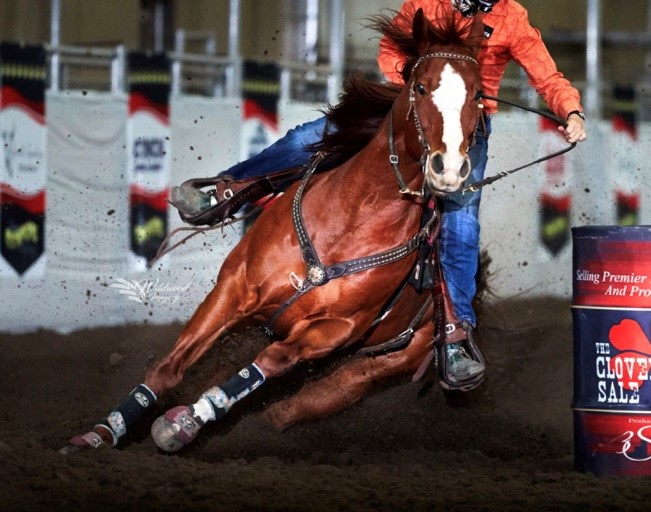
One example is a Quarter Horse named SR Famousinparadise or Elvis for short. Elvis suffered severe injuries to both front deep digital flexor tendons (DDFT). The DDFT functions to stabilize the joints of the lower leg when the limb is weight bearing and allows flexion of the digit. Unfortunately, injuries to the DDFT are common in athletic horses. These injuries are serious and can significantly affect a horse’s soundness and athletic ability. Injury to the DDFT typically requires a lengthy rehabilitation process regardless of the treatment method.
SR Famousinparadise aka Elvis
In Elvis’ case, his veterinarian, Dr. Fabio Aristizabal of Cave Creek Equine Sports Medicine and Surgery, recommended treatment with VetStem Cell Therapy. Typically, the fat for stem cell therapy comes from the tailhead of the horse. It’s a minimally invasive procedure that can be done with limited to no scarring. After the fat was processed at the VetStem cell processing laboratory, several doses of Elvis’ own stem cells were prepared and shipped to his veterinarian for injection into his injured tendons and surrounding areas.
VetStem Cell Therapy utilizes the patient’s natural healing cells to treat degenerative diseases such as osteoarthritis as well as traumatic injuries such as torn ligaments and injured tendons. Stem cells are regenerative cells that can differentiate into many tissue types. They have been shown to reduce pain and inflammation, help to restore range of motion, and stimulate regeneration of tendon, ligament, and joint tissues. Additionally, stem cells can reduce the formation of scar tissue, and lead to cleaner, more complete healing of torn tendons and ligaments.
After his treatment, Elvis began a strict rehab protocol including stall rest, hand walking, and new shoes every six weeks. At about 1/3 of the way through his recovery, Elvis had an ultrasound to evaluate his injuries which showed significant healing. According to his owner, Elvis continued his rehab program and has appeared happy since the treatment.
If you think your horse may benefit from VetStem Cell Therapy, speak to your veterinarian or contact us to receive a list of VetStem providers near you.
Monday, March 13th is National K9 Veterans Day. This day is set aside to commemorate the service and sacrifices of American military and working dogs throughout history. The date is significant, as it was on March 13, 1942 that dogs first began training for the new War Dog program, and officially became a part of the U.S. Armed Forces.
VetStem has treated several working K9s, including Lex, the bomb sniffing German Shepherd who served two tours in Iraq. While we have shared his story before, it’s always worth revisiting as a reminder of the sacrifices working dogs make in order to serve their two-legged companions.
In 2007, Lex was on duty in Iraq with his handler and best friend, 20-year-old Corporal Dustin Lee. On March 21, 2007, Cpl. Lee’s base was attacked, and a 73 mm rocket explosion killed Cpl. Lee. Lex was also injured in the attack however was said to have laid upon Cpl. Lee in an attempt to protect him. Later, it was said that Lex had to be pulled away from Cpl. Lee to allow medics to attend to him. Unfortunately, Cpl. Dustin Lee succumbed to his injuries and passed away shortly after being taken to a nearby hospital. This was just six weeks before Cpl. Lee was scheduled to return home.
Lex also sustained injuries in the attack. His fur was burned and shrapnel was lodged in his back and spine. After returning home and attending the funeral of his friend Cpl. Lee, Lex returned to duty at the Marine Corps base in Georgia. Cpl. Lee’s family however lobbied for months to adopt Lex and in December 2007, Lex was officially discharged from the U.S. Marine Corps and taken home to his new family in Mississippi.
But Lex’s story doesn’t end there. Due to his injuries and the shrapnel that was still lodged in his body, Lex developed degenerative joint disease. His osteoarthritis became a problem, causing pain and mobility issues. That’s where VetStem comes in. Lex was taken to Dr. Lee Morgan of Georgetown Veterinary Hospital who recommended treatment with VetStem Cell Therapy. In 2010, Lex received injections of his own stem cells in his left hip and knee as well as intravenously. Lex initially had a great response to treatment and regained the ability to go up stairs.
In addition to Lex, VetStem has provided stem cell therapy services for several law enforcement and working K9s including Yana, a search and rescue dog, and Jax, an explosive detection dog. Though their stories may not be as dramatic as Lex’s, working dogs face rigorous physical activity and the potential for injury while on the job or later down the line after years of wear and tear on their joints. Just like their two-legged partners, they are willing to sacrifice it all for the safety of others. And for that, we honor all K9 veterans and working dogs alike.
Life for a dog with osteoarthritis can be tough. Pain and inflammation cause a decrease in mobility and quality of life. And those things become much worse when you suddenly lose a limb due to cancer. This is Reggie’s story.
Reggie, a mixed breed dog, lived an active and playful lifestyle. He was accustomed to 20+ mile hikes in the beautiful Colorado mountains and enthusiastically played fetch for hours in his back yard. Unfortunately, he was diagnosed with osteoarthritis in his hips and his quality of life quickly began to deteriorate. His 20-mile hikes turned into 5 miles on flat terrain followed by crippling hip pain for the rest of the week. His legs began to slip out from under him while playing fetch and he would be in intense pain afterwards. Because of this, his ball had to be retired.
To make matters worse, Reggie was diagnosed with a cancerous tumor on his front left leg. He was 11 years old at the time, so his owners initially elected to remove the tumor as opposed to amputating his leg. Despite several surgeries to remove the tumor, it kept recurring. To minimize chances of metastasis, Reggie’s owners eventually opted to amputate his leg at the recommendation of his veterinarian.
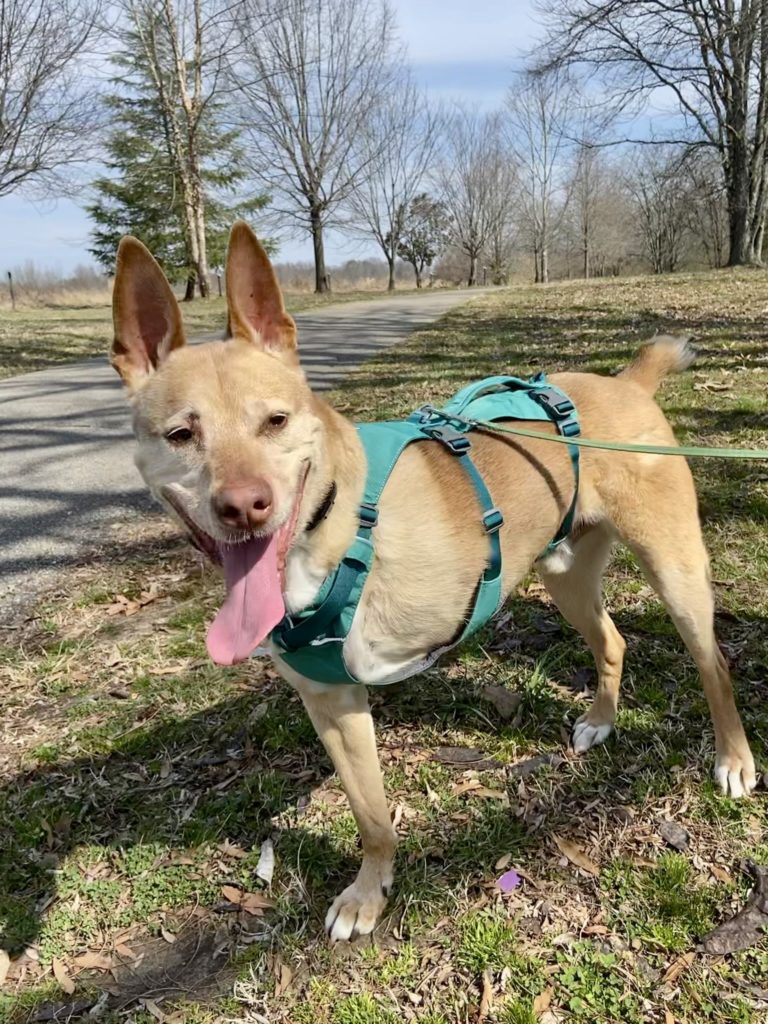
Reggie
At the same time, his veterinarian recommended treatment with VetStem Cell Therapy for his remaining arthritic limbs. During his amputation surgery, his veterinarian, Dr. Angie Zinkus of Germantown Parkway Animal Hospital, collected fat tissue for VetStem Cell Therapy. The fat was shipped to and processed at the VetStem processing laboratory, and six stem cell injections were shipped back to Dr. Zinkus. Approximately 48 hours after the initial fat collection procedure, Reggie received an injection of his own stem cells into both hips, both knees, as well as his remaining elbow and shoulder.
When a dog undergoes leg amputation, the remaining legs must bear the extra weight, which may lead to the development and/or worsening of osteoarthritis. By treating Reggie’s shoulder, elbow, and knees, in addition to his arthritic hips, Dr. Zinkus hoped to mitigate the excess wear and tear on his joints, and potentially delay the onset or reduce the severity of future osteoarthritis in those joints.
In addition to stem cell therapy, Reggie received platelet therapy in each of his treated joints. Platelet therapy and stem cell therapy work synergistically. Concentrated platelets accelerate internal healing processes by attracting stem cells, supporting an anti-inflammatory environment, and stimulating local tissue repair processes.
According to his mom, Reggie had a great response to the stem cell and platelet therapy. She stated, “Once Reggie recovered from the amputation and was solid on his 3 legs, his quality of life has been amazing! His ball has come out of retirement and he is back to chasing it down like a champ without pain! We’ve slowly been increasing his mileage on his daily walks and he hasn’t been in any pain. His hips had been so painful that he no longer wanted to snuggle in bed with us for fear that we would bump his hips, and now we almost can’t get him out of our bed. The stem cell and PRP injections have given us our boy back, and he is living his best senior tripawd life! We celebrated his 13th birthday in February and are grateful to have a few more years with him knowing he will be comfortable.”
If you think your pet may benefit from VetStem Cell Therapy, speak to your veterinarian or contact us to receive a list of providers near you.
The VetStem Sales and Marketing team just returned from several days at the 2023 Western Veterinary Conference (WVC) in Las Vegas. These veterinary conferences are a great way to meet with existing and potential clients to talk all things regenerative veterinary medicine. WVC is one of the largest veterinary industry shows in the nation and VetStem has exhibited at this show for over 15 years.
Veterinary trade shows allow us the opportunity to speak to and educate veterinarians and veterinary technicians from all over the country about VetStem Cell Therapy and how they can implement this therapeutic modality in their practice. Many veterinarians show interest in our clinical research programs, such as inflammatory bowel disease and renal disease, as these conditions tend to have limited treatment options.
This year, we were excited to give attendees a sneak peak at an upcoming product. Unfortunately, it’s too early to spill the beans here, but it’s definitely something to get excited about! Follow VetStem on Facebook and Instagram to keep up with our latest news and announcements.
Perhaps most exciting was the fact that Mick, who belongs to VetStem CEO, Dr. Bob Harman, made his official trade show debut! He did great and was the perfect gentleman in the booth. Though still a puppy, he is doing wonderfully with his training.
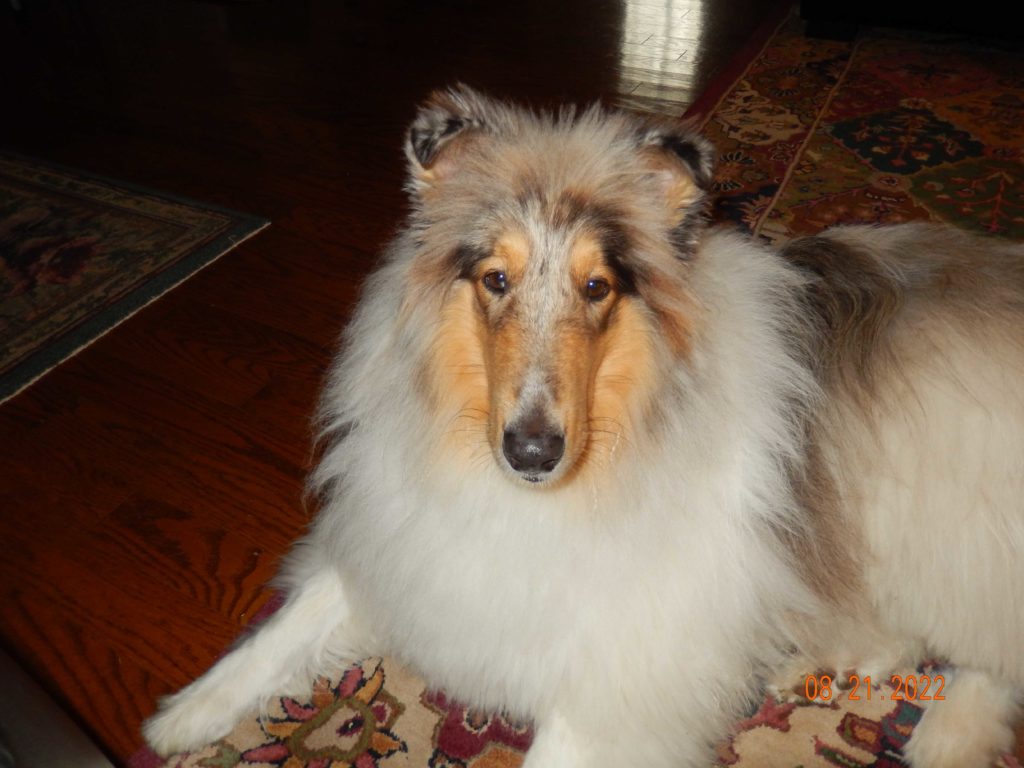
Nickie has always been an animal lover so when she found her home without a dog, she went in search of a new companion to join her family. She soon found Casey, an 8-week-old Rough Collie, and this adorable ball of fluff joined their family.
Unfortunately, the joy of the puppy days was short lived. At just four months old, Casey began to not eat regularly. Nickie diligently tried every recommendation her veterinarian made and not only did Casey’s appetite not improve, but he began to have frequent bouts of diarrhea and vomiting. She tried a variety of commercial, homemade, and prescription diets with no relief. In conjunction with the diets, Casey’s veterinarian prescribed numerous medications, including a steroid called prednisone.
After a variety of diagnostics including X-rays, bloodwork, ultrasound, and biopsies of his GI tract, Casey was diagnosed with Inflammatory Bowel Disease (IBD). As indicated by the name, the intestines of a pet with IBD are chronically inflamed, resulting in symptoms such as diarrhea, vomiting, inappetence, and weight loss. Currently, the primary treatments are medical management via diet and steroids +/- additional supportive medications.
Casey continued his regimen of 7 different medications and a prescription diet with minimal control of his symptoms for nearly 3 years until routine bloodwork revealed that his liver enzymes were elevated. He had another ultrasound with biopsies of his liver that revealed the steroids were damaging his liver. He still struggled with frequent watery diarrhea, vomiting, and weight loss as well as hair loss and red, inflamed skin. Nickie was distraught and questioned if the time had come to let Casey go.
At this time, Casey’s veterinarian suggested trying VetStem Cell Therapy. VetStem, a veterinary regenerative medicine company located in California, is currently researching the use of stem cells for the treatment of IBD. Stem cells have demonstrated the ability to down-regulate inflammation, modulate the immune system, and repair damaged tissue. Additionally, multiple clinical studies have demonstrated that stem cells can improve the symptoms of IBD.
Nickie and her husband were skeptical at first, wondering if this was snake oil or just another dead end in Casey’s treatment. After discussion and research, they decided to pursue stem cell treatment as a last resort. Casey had fat collected from his abdomen in a minimally invasive anesthetic procedure. The fat was aseptically packaged and shipped to the VetStem processing laboratory. Lab technicians processed the fat to isolate and concentrate the stem and regenerative cells contained therein. Therapeutic doses were then prepared for treatment.
Casey
Over the course of 10 months, Casey received 5 separate intravenous doses of his own stem cells. According to his owner, his symptoms have improved greatly and Nickie feels like she is finally getting to meet the real Casey. He now interacts with his family and even plays with them. He has made a best friend at the park that he loves to play with and takes long naps on the porch in the sun. He rolls over for belly rubs, which he had not done in the first 3 years of his life.
Today, Casey eats well and is off all but one of his medications, including being completely off steroids. He has occasional IBD flare ups but nothing to the degree he experienced previously. He has grown back a full, thick Collie coat and loves to “talk” to Nickie and announce all the goings-on in his neighborhood. Nickie says that she has the wonderful problem that Casey is now slightly overweight, something she never thought she would see! Nickie says that without the excellent care of her veterinary team and VetStem Cell Therapy, Casey would not be here today.
Veterinary stem cell therapy, though not new, has gained significant traction in the last 10 years. Through ongoing research and treatment data, we continuously learn more about the many functions of stem cells and what diseases can be treated. VetStem has a variety of research programs, including the IBD program, to collect data and better understand how we can help pets. There is still much left to learn, and it is important to note that each animal responds differently to treatment.
If you think your pet may benefit from VetStem Cell Therapy, speak to your veterinarian or contact us to receive a list of VetStem providers near you.
Next week is Veterinary Assistant Appreciation Week! Veterinary Assistant Appreciation Week was only recently started by The Stephen & Christine Schwarzman Animal Medical Center in 2022. Since most of our staff are former veterinary assistants, we wanted to take a moment to acknowledge these key players in your pet’s veterinary care.
Veterinary assistants are an integral part of the veterinary team. As you may have guessed, their job is to assist veterinarians and licensed veterinary technicians in all aspects of patient care. Some of their responsibilities may include ensuring patient comfort, sterilizing and preparing animal care equipment and facilities, animal restraint, as well as patient and client advocacy.
At VetStem, one of our main focuses is on education. We want to ensure that veterinarians and their team are educated and informed about VetStem Cell Therapy so they can answer their clients’ questions about treatment with stem cells. We understand that sometimes veterinary assistants are the messengers when it comes to explaining the VetStem process. As such, we do our best to make sure that all members of the veterinary team are informed about the ins and outs of stem cell therapy.
To do this, we offer online learning modules that are open to veterinarians and their team. We also provide local in-person and remote lunch and learns. This gives us a great opportunity to educate the entire team about VetStem Cell Therapy while also showing our appreciation by providing them with lunch.
We understand the value and knowledge that veterinary assistants bring to the team and know that veterinarians couldn’t do what they do without them! So if you get the chance, consider thanking your veterinary assistants next week.
In honor of National Golden Retriever Day, we are sharing a VetStem success story about a Golden Retriever named Makalia. At a young age, Makalia was diagnosed with bilateral elbow dysplasia. At approximately two-years-old, Makalia underwent elbow arthroscopy in her left leg, which was the worst of the two. Despite the procedure, Makalia would limp on and off. Her owners managed her pain with medication for several years.
When Makalia was eight years old, she began limping on her right front leg more. The limp got progressively worse and eventually she became completely lame on that leg. After laser therapy didn’t help, Makalia’s veterinarian, Dr. Adam Gassel, recommended arthroscopy on the right elbow in addition to treatment with VetStem Cell Therapy on both elbows.
Makalia
To begin the process, Dr. Gassel collected fat tissue from Makalia’s abdomen in a minimally invasive anesthetic procedure. At the same time, he performed arthroscopy on her right elbow. Her fat tissue was shipped to the VetStem processing lab where it was processed to extract and concentrate the stem and regenerative cells contained therein. Three injectable doses of Makalia’s stem cells were shipped back to Dr. Gassel. Approximately 48 hours after the initial fat collection procedure, Makalia received an injection of her own stem cells into each elbow as well as intravenously.
In a 90 day follow up evlauation, Makalia’s owners noted that she was no longer lame. Her stiffness, pain, and energy level had improved and she was no longer having problems walking or jumping. Her owner stated, “I didn’t realize how much pain she was in because now she is a new dog. Happier and playful again.”
Unfortunately, Golden Retrievers are among the breeds that have a higher likelihood of being diagnosed with joint dysplasia and osteoarthritis. The good news is, VetStem Cell Therapy can help to reduce pain and inflammation associated with OA and can even lead to the regeneration of healthy cartilage tissue.
If you think your pet may benefit from VetStem Cell Therapy, speak to your veterinarian or click here to receive a list of VetStem providers near you.
Recently, we shared the success story of a sweet Husky mix named Kobi who was successfully treated with VetStem Cell Therapy for osteoarthritis in her elbows and wrists. Kobi’s story is special, in large part due to her traumatic start in life, followed by a harrowing prognosis after her parents learned she had severe osteoarthritis. Her owner’s submitted her story as a testimonial, and reading it gave us chills! So, while you may have already read VetStem’s version of the story, here is the full unedited version of Kobi’s story.
Kobi was a rescue through the Second Chance Pet Network in Dryden, Ontario. My husband Tom and I saw her on a Facebook post with her tiny curled husky tail and fell in love immediately, so we applied for adoption and set an appointment to meet her.
We learned that Kobi had a very rough beginning. She was found in November in a reservation in Northern Ontario, with no parents in sight. Her litter mates had passed away from the cold and only she and her brother were still alive, huddled in the middle together. The rescuers brought the two pups south to the shelter, and immediately realized the little boy was sick. Kobi and her brother were separated and he passed away soon after from parvovirus. Kobi was nursed back to health and eventually placed in a wonderful foster home.
Kobi
When we met Kobi at nearly 8 months old, we couldn’t believe she hadn’t been adopted yet. When we visited her foster home, Kobi bounced right up to us and dropped onto her back to show her belly. I gave her a little rub and couldn’t believe how sweet she was. We loaded her up into the car and brought her home.
We introduced her to March (our 6-month-old German shepherd cross, adopted through the Winnipeg Shelter) and it was unconditional love at first sight. Day in and day out they wrestled and played but about 3 weeks after Kobi came home, she called for help from the yard. She was holding up her front leg, so I ran out and carried her inside. Hoping it was just a strain from hard play, we let her rest through the night. It did seem to improve, but then two days later, she called for help again and it was the opposite leg she was holding up. Puzzled, we made a vet appointment for her.
During the x-rays, it was obvious that the damage done to her little body in the cold had taken its toll, and as she grew, she developed dysplasia and arthritis in both front knees. She was put on pain killers and it was so hard seeing her dopey and hurting. Within a few weeks we were able to bring her to a surgeon nearly 6 hours away in Winnipeg and she had surgery on both front legs to correct the dysplasia and try to clean up some of the arthritis. It was so expensive, but very worth it, because it worked well! After a difficult and lengthy healing period, she was back to her nutty, bouncy self. The vet did say, however, that the arthritis was not a mild case and we’d be able to expect about 6 years before it became too much for anti-inflammatory and pain medication to handle.
That was hard to hear, but we’re stubborn people and we were determined Kobi was going to live her longest and best life. Over the next two years, Tom and I fostered 40 puppies and dogs, largely with the help and patience of March and Kobi. There were ups and downs with her comfort level but for the most part, Kobi was a happy, hilarious, quirky puppy.
In 2019, the 4 of us moved to Calgary, Alberta. A BIG city compared to where my country girls grew up, but they love a good adventure! After about a year and a half, when Kobi was creeping up to 5 years old, she started showing signs of pain and slowing down. Is a husky who can’t be the fastest dog at the Bark Park even a husky anymore? We visited a few vets looking for solutions and it was a really emotional time. I refused to believe the only option was pain medication and laser treatment until it was time to let her go. That was for old dogs and she was still just a puppy.
After a lot of tears and many hours of research, Tom found something called Stem Cell Therapy. We found Bow Bottom Veterinary Hospital in Calgary and they were incredible with Kobi. Dr. Schell identified that Kobi would be a great candidate for the treatment! It wasn’t an easy journey – another big surgery for our little husky to harvest the cells, but from there, the injections were easy peasy. After 3 weeks, it was clear that Kobi had never felt better. Literally! She’d NEVER been that comfortable before in her whole life. She played more and cuddled harder than ever before. It was incredible! Two weeks ago we all celebrated Kobi’s 6th birthday together. There was a point when we thought our time together would be up by now, but today she’s got a lot of years left and we’re going to make the best out of every single one of them. <3