Nov 23, 2018

StemInsure: The Stem Cell Insurance for Dogs

Posted by Bob under Dog Stem Cells, Stem Cell Therapy

Similar to storing your baby’s stem cells at birth, the canine StemInsure provides peace of mind with banked stem cells that can be used later in life should your dog require them.  While we can’t bank cord blood/tissue like we do with infants, the StemInsure is similar to our standard stem cell process where we extract stem cells out of a small amount of fat from your furry friend.

The great thing about the canine StemInsure is the fat can be collected in conjunction with an already scheduled, routine procedure such as a spay or neuter.  When your vet is performing the procedure, they would collect a very small amount of fat from your dog and send it to our laboratory to be processed where the small number of stem cells would be extracted and cryopreserved.  This process costs considerably less since it is a smaller amount of fat than is required for our normal process. If your dog develops arthritis or injures a tendon or ligament down the road, those cells would be available without requiring an additional anesthetic procedure to collect more fat tissue.  For this reason, we recommend StemInsure for all large breed puppies and other “at risk” breeds that tend to develop orthopedic issues as they age.

StemInsure is not only appropriate for puppies, however.  Dogs of all ages and breeds can benefit from this procedure.  An example would be an older dog that is undergoing an anesthetic procedure such as a dental cleaning.  Older animals tend to be a higher anesthetic risk than puppies so it is ideal to minimize their time under anesthesia.  Rather than removing a larger amount of fat from your dog’s abdomen, your vet can quickly remove a small amount of fat from beneath their skin in an effort to reduce the amount of time spent under anesthesia.

Unlike our standard stem cell process where your vet sends us fat and we send back injectable stem cell doses 48 hours later, the StemInsure sample cannot be used for immediate treatment.  Instead, the smaller tissue sample size yields enough cells that can be used to culture, or grow, a lifetime supply of stem cell doses for treatment at an additional cost when you need them.  This culture takes about 3-4 weeks however so if your dog requires treatment sooner than that, discuss with your veterinary stem cell provider which option will be best for your dog.

To find a veterinary stem cell provider in your area, click here.

Share
Nov 16, 2018

VetStem Patient, Argo, Featured on Local News (Again!)

Remember our friend, Argo, the chocolate Labrador that was featured on the local news for his treatment with VetStem Regenerative Cell Therapy?  He just had his second cameo on a longer news segment that discussed his stem cell and platelet therapy treatments for arthritis.  You can watch the new video and read his story here.

Both Dr. Angie Zinkus and Dr. Kathy Mitchener have been credentialed to perform VetStem Regenerative Cell Therapy for over a decade.

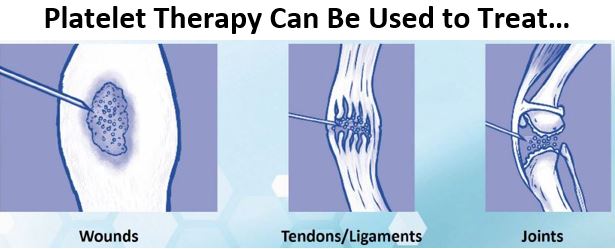
One thing we would like to point out: the article states that Argo’s platelet therapy required a 48-hour processing period.  While this is true of stem cell therapy, platelet therapy is an in-clinic procedure that can be done in a matter of a few hours.  VetStem is the distributor of the Veterinary Platelet Enhancement Therapy kit (V-PET™) but your veterinarian will perform the blood collection, processing, and injection.  For more information on Veterinary Platelet Enhancement Therapy, click here.  Or you can read V-PET™ success stories here and here.

If you think your pet may benefit from VetStem Regenerative Cell Therapy, speak to your veterinarian today.  Or you can contact us to receive a list of VetStem Credentialed veterinarians in your area.

Share
Nov 9, 2018

Stem Cell Therapy for Cats Part 3: Gingivostomatitis

Posted by Bob under Cat Stem Cells, Stem Cell Therapy

In our last two blog posts, we discussed stem cells for cats.  In addition to arthritis, stem cells may be beneficial for felines with Chronic Kidney Disease (CKD) and Inflammatory Bowel Disease (IBD).  In this week’s blog, we will discuss feline Gingivostomatitis.

Gingivostomatitis is a disease affecting the mouth of felines.  It causes oral pain which leads to other symptoms such as decreased appetite, reduced grooming, and weight loss.  The most common treatment is extracting all the cat’s teeth, however only about 70% of cats will respond to this treatment.  Those cats that do not respond will require lifelong treatment with medications.

Two small studies on cats that had full mouth extractions conducted at the University of California Davis have shown that fat-derived stem cell therapy led to improvement or remission in the majority of cats treated.  VetStem believes that fat-derived stem cells without full extractions may be beneficial.  While a few veterinarians have seen favorable results using VetStem cell therapy, more investigation is needed.

If your cat has Chronic Kidney Disease, Inflammatory Bowel Disease, or Gingivostomatitis, stem cell therapy may provide relief.  Contact us today to locate a VetStem Credentialed veterinarian in your area.

This concludes our “Stem Cell Therapy for Cats” blog series.  Thanks for reading!  If you have any questions, feel free to contact us at info@vetstem.com.

Share
Nov 2, 2018

Stem Cell Therapy for Cats Part 2: Inflammatory Bowel Disease

Posted by Bob under Cat Stem Cells, Stem Cell Therapy

Last week, we shared part 1 of this blog series regarding stem cells for cats.  While stem cells may be an effective treatment for arthritic felines, there are a few other diseases for which stem cells may be beneficial including Chronic Kidney Disease, Inflammatory Bowel Disease, and Gingivostomatitis.  In last week’s blog, we discussed Chronic Kidney Disease.  In part 2 of this series, we will look at Inflammatory Bowel Disease and how stem cells may be of benefit.

Inflammatory Bowel Disease (IBD) is a chronic gastrointestinal disorder characterized by inflammation in the gut.  Some of the common symptoms include diarrhea, vomiting, reduced appetite, and weight loss.  It is important to note however that these symptoms can be indicative of several various ailments such as food allergies, bacterial or viral infections, and intestinal parasites.  Typically, these problems can be resolved with dietary changes and/or antibiotics while IBD is generally responsive to immunosuppressive therapy such as steroids.

Also, when considering stem cell treatment for cats with IBD, it is necessary to rule out Lymphoma as the underlying cause of the symptoms.  VetStem Regenerative Cell Therapy is contraindicated in patients with active cancer.

In a case study where a 4-year-old Himalayan cat developed IBD, treatment with VetStem Regenerative Cell Therapy quickly resolved the cat’s diarrhea and vomiting and led to an increased appetite.  To add to that, in a recently published paper, 5 out of 7 cats that were treated with stem cells were significantly improved or had complete resolution of symptoms whereas the 4 control cats had no improvement.1

If your cat has Inflammatory Bowel Disease, stem cell therapy may provide relief.  Contact us today to locate a VetStem Credentialed veterinarian in your area.  And stay tuned for part 3 of this blog series in which we will discuss stem cells for Gingivostomatitis.

Note: Dogs with IBD may benefit from stem cell therapy as well.


1. Webb, TL and Webb, CB (2015) Stem cell therapy in cats with chronic enteropathy: a proof-of-concept study. J Fel Medand Surg(10). 17, 901-908.

Share
Oct 26, 2018

Stem Cell Therapy for Cats Part 1: Chronic Kidney Disease

Posted by Bob under Cat Stem Cells

A few weeks ago, we shared a blog post about stem cell therapy for arthritic cats.  Similar to stem cell therapy for dogs, there are additional common feline diseases for which stem cells may be beneficial.  These diseases include Chronic Kidney Disease (CKD), Inflammatory Bowel Disease (IBD), and Gingivostomatitis. VetStem is still evaluating the use of stem cells for these disease processes with some favorable results being seen.  In part one of this blog series, we will discuss feline Chronic Kidney Disease and how VetStem Regenerative Cell Therapy may provide some relief.

Chronic Kidney Disease is a major cause of morbidity and mortality in cats.  Common symptoms include lethargy, increased urine output, and weight loss.  Other than a kidney transplant, which is costly and invasive, there really is no definitive cure for CKD.  Current therapies include supportive measures such as subcutaneous fluids and special diets.  The disease process, however, will continue to progress.

VetStem veterinarians have seen some promising results in the treatment of feline CKD.  Based upon data from a small number of feline patients treated with VetStem Regenerative Cell Therapy, blood kidney values were slightly to moderately improved after treatment.  While more evaluation is necessary, these preliminary results suggest that stem cell therapy may be a low-risk treatment option for cats with CKD.

If your cat has Chronic Kidney Disease, stem cell therapy may provide relief.  Contact us today to locate a VetStem Credentialed veterinarian in your area.  And stay tuned for part 2 of this blog series in which we will discuss stem cells for Inflammatory Bowel Disease.

Share
Oct 19, 2018

Stem Cells Helped Pearl Retrieve her Frisbee

Pearl is a 10-year-old black lab who loves retrieving her Frisbee. When Pearl developed a persistent limp, her concerned owners took her to be examined by her veterinarian. Pearl was referred to Dr. Amie Csiszer at Oregon Veterinary Referral Associates who determined that Pearl had elbow dysplasia, which caused osteoarthritis in her elbows. Dr. Csiszer recommended elbow arthroscopy along with VetStem Regenerative Cell Therapy.

Pearl had her procedures done in September 2017. After her recovery, Pearl’s pain and lameness improved and by the third month after the procedure, Pearl was back to chasing her Frisbee.

Pearl’s owner, Norm, began an almost daily ritual of taking Pearl to play fetch in the local pond. This allowed her to exercise without hard impact on her joints. Pearl was placed on a diet to lose some weight, which also helped relieve the arthritis in her joints. You can catch up on Pearl’s story here.

We recently checked in with Norm and he reported that Pearl is still chasing her Frisbee in the pond. He even sent us some new action shots (see below). He stated, “she is doing wonderfully and shows no evidence of her past lameness.” Great news for Pearl and her family!

Share
Oct 12, 2018

What happens to my dog’s stem cells if I move?

For those of you who have had your dog treated with VetStem Regenerative Cell Therapy, you may know that we store stem cells from nearly every patient who has had a sample processed at VetStem.  Banked doses are cryopreserved and can be carefully recovered from cryopreservation should your dog require future treatments.  But what happens if you move and no longer see the veterinarian who originally treated your dog?  This is a question we have received in the past and the good news is that VetStem has trained close to 5,000 veterinarians to perform stem cell therapy and if there is not one near you then most licensed veterinarians can be trained to use VetStem Regenerative Cell Therapy.

Take Bowie for instance.  Bowie is a 13-year-old Japanese Chin who showed his enthusiasm for life by spinning in circles, or doing “chin spins,” as his owner called it.  He would use his left hind leg to pivot so it was no surprise that by the time he was 5 years old, he was showing signs of severe degenerative joint disease.  His veterinarian at the time, Dr. Patrick Leadbeater of Kahala Pet Hospital in Hawaii, performed surgery on Bowie’s knee and treated him with stem cells in 2010 and again in 2015.

In 2016, Bowie’s owners moved to California.  In 2018, Bowie began showing signs of arthritis once again.  Fortunately, Bowie had several stem cell doses banked.  His owners took him for a consult with their new veterinarian, Dr. Andreana Lim of McGrath Veterinary Center.  Though credentialed to perform VetStem Cell Therapy, Dr. Lim had not yet treated a stem cell patient.  In June 2018, Bowie became her first stem cell patient.  He received injections in both hips and both knees.

Our veterinarians span across the United States and Canada so if you move, we will help you find a credentialed veterinarian near you or will help a veterinarian of your choosing become VetStem credentialed.  Need to find a VetStem credentialed veterinarian near you?  Click here to receive a list of veterinarians near you.

Share
Oct 5, 2018

Mandy, the Tripod Mini Aussie, Experiences Improved Mobility

Mandy’s mobility issues began when she was around four years old.  She broke her right front leg in three places and after several failed surgeries, she ended up having the leg amputated.  Not long after, she began showing symptoms of arthritis in her rear end.  Mandy’s mom, Susan, took her for a consult with Dr. Jerrold Bausman of VCA Veterinary Specialists of the Valley.  Dr. Bausman confirmed that Mandy had arthritis in her hips and ankles and recommended treatment with VetStem Regenerative Cell Therapy.

Mandy received her stem cell treatment in December 2017 and Susan noticed improvement in her mobility shortly after.  You can read the rest of Mandy’s story here.

We recently checked in with Susan and Mandy is still doing great!  Mandy is eight years old now and has stem cell doses stored at VetStem should she require future treatments.

If your dog has been diagnosed with arthritis, visit your veterinarian to determine if stem cell therapy may help.  Or you can contact us for a list of stem cell providers in your area.

Share
Sep 28, 2018

Feline Arthritis: It’s Not Just a Dog Problem

Posted by Bob under Cat Arthritis, Stem Cell Therapy

As you may know, the majority of our blogs focus on canine arthritis.  But let’s not forget about our feline friends.  Like dogs, cats are living longer, healthier lives and also suffer from common “old age” problems such as osteoarthritis. In fact, in a retrospective study conducted at a major veterinary school, radiographs from 100 cats that were presented to the teaching hospital for illnesses unrelated to arthritis were re-evaluated.  90% of the cats had radiographic evidence of degenerative joint disease.

How do you know if your cat has arthritis?  Well, first of all, they may not show the same
signs of arthritis that dogs do.  For instance, they may not noticeably limp the way dogs do.  Cats generally hide their pain very well.  Listed below are some questions you can ask yourself to see if your cat may have osteoarthritis.

  1. Is your cat less active than he/she used to be?  While cats are not known to be high performance athletes, a change in activity level may indicate pain associated with arthritis and not necessarily just normal ‘lazy’ cat behavior.
  2. Is your cat missing the litterbox? While this could be a behavioral issue or the sign of a kidney or bladder issue, also consider OA. Some cats may be too painful to want to step into and out of a litterbox.
  3. Does your cat take longer to get up from lying down or have difficulty moving around?  If your cat no longer jumps on that high ledge like he/she used to, your cat may have arthritis.

Did you answer yes to one or more of the above questions?  If so, you should consult with your veterinarian to determine if your cat has arthritis.  While there are not a lot of safe options for controlling pain in cats, VetStem Regenerative Cell Therapy has been shown to be a low-risk and effective treatment for osteoarthritis.  If you are interested in consulting with a credentialed VetStem provider, contact us to receive a list of providers in your area.

Share
Sep 21, 2018

VetStem Patient, Argo, on Local News!

It was recently brought to our attention that a VetStem patient named Argo was featured on the local news for his stem cell treatment.  Argo is a 5-year-old chocolate Labrador with arthritis in several joints.  He received stem cell injections in his shoulders, elbows, hips, and knees by Dr. Angie Zinkus of Germantown Parkway Animal Hospital.  He also received platelet therapy injections in each joint utilizing Veterinary Platelet Enhancement Therapy (V-PET), to further stimulate the natural healing process.

Click on the picture below to watch Argo’s 15 minutes of fame! (scroll down to the second video)

Share