Veterinarian Highlight: Cindy Echevarria, DVM
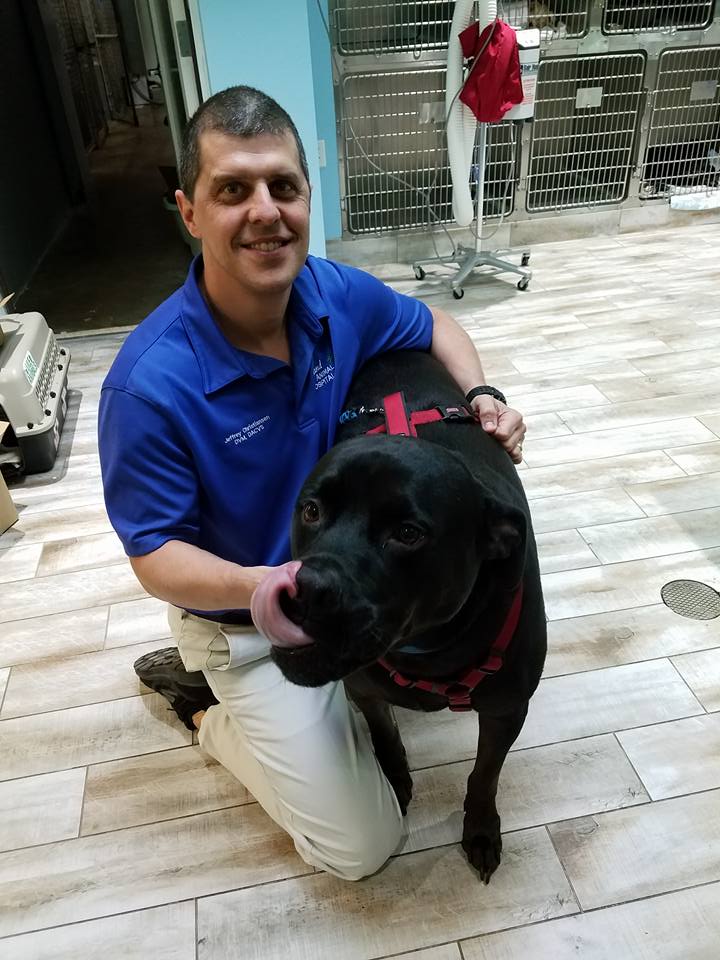
This week we would like to introduce you to VetStem proponent, Dr. Cindy Echevarria of VCA University Animal Hospital in Dallas. Dr. Echevarria has been utilizing VetStem Cell Therapy since early 2015 and has treated nearly 40 patients, including her own dog, Bella. Dr. Echevarria also treated Stuart, the Lab with a soft tissue injury and Seve, a Golden Retriever with osteoarthritis in his hips.
We recently caught up with Dr. Echevarria to ask her some questions about how she utilizes VetStem Cell Therapy. See her answers below.
At what point in the process do you recommend stem cell therapy for your patients (ie, when the injury/ailment is first diagnosed, after meds have proven unsuccessful/detrimental, etc.)
I usually recommend stem cell for all orthopedic injury cases, particularly ACL tears, and arthritic cases. For cruciate injuries I find combining the TPLO or repair surgery with the collection part of the stem cell process to be easy on the pet and the owner since the recovery process goes unchanged. Anything that does not inconvenience the owner further but helps the pet makes it easier to relay the benefits to the owner. Since aftercare alone is a lot to take on for each procedure alone, being able to manage both at the same time saves the owner time and stress (versus doing the procedures independently). Also, as discussed at the time of injury, once one ACL tears it is very common for the other to tear in the future. Having the stem cells available in the future allows for re-infusion into originally affected limb and new limb if needed without having to collect additional cells. Some owners do not have the funds to do all at once, but at least discussing the options with them helps them narrow down where their funds would be best utilized.
I also commonly bring it up for owners who are tired of what they perceive as over-medicating or “nothing works” idea. Many of the cases I have done that were on medications have been able to be reduced significantly to none in some cases. Although it can be mentioned as last resort if nothing else works, I feel like the sooner stem cell is used on the pet, the higher chances of success. Including offering StemInsure when they are young (at time of spay or neuter) for those breeds that are prone to arthritis or those dogs (hunting, agility, etc) that are at higher risk of needing stem cell in their future.
I had a Newfoundland puppy that I did StemInsure on for her potential bilateral elbow dysplasia that her predecessor had and the fact of her size/breed overall. 2.5 years later she tore her ACL. Her cells were already stored at that time and only had to be processed at the time of her knee repair. Worked really well and the owners were pleased that that had even been offered back when she was a puppy. It has been about 1.5 years since her TPLO/stem cell infusion and she continues to not need pain management. She only takes Dasuquin (which I advise for all my patients with injuries or arthritis), regardless of stem cell.
What parameters make a patient a good candidate for stem cell therapy?
*are we on pain management and only minimal improvement?
*has the pet been on long term meds and liver/kidney values now an issue? medications are more limited now
*are their neurologic deficits? If yes, I generally do not proceed with stem cell. I always offer a free initial assessment to see if stem cell would even be an option for the pet.
*does the pet have or has had cancer? I usually do not proceed with stem cell.
*what other conditions might the pet have that would compromise the effectiveness of the stem cells or are they higher risk for anesthesia for the collection process?
Advice for pet owners considering stem cell therapy for their pet.
There is so much benefit from stem cell aside from joint related ailments, that just reading about it and asking for testimonials goes a long way. I am always open to calls for those interested or just want to know more about it. I am also very real about the fact that it is intense and probably inconvenient for most the following 8 weeks after infusion, but it does get results.
If you’re located in the Dallas/Fort Worth area and are interested in VetStem Cell Therapy for your dog or cat, we recommend a visit with Dr. Echevarria.