VetStem Cell Therapy for Canine Dry Eye
As most of you know, stem cell therapy is most commonly used to treat orthopedic conditions such as osteoarthritis and injured ligaments. In previous blogs, we’ve shared that VetStem Cell Therapy may help other conditions such as canine back pain, inflammatory bowel disease, feline kidney disease, and feline gingivostomatitis. VetStem continues to evaluate the use of stem cells for these disease processes with some favorable results being seen. Another condition that VetStem is evaluating is canine Keratoconjunctivitis Sicca, otherwise known as KCS and commonly referred to as “dry eye.”
This disease of the eye is found in an estimated 35% of dogs. Symptoms include decreased tear production, discomfort, and potential vision problems. Studies suggest KCS may be caused by an inflammatory process that leads to the destruction of the tear production glands. Unfortunately, most dogs with KCS will require lifelong treatment with medications to relieve the symptoms associated with the condition.
The good news is, two recent studies found that symptoms of KCS in dogs were reduced or, in some cases, completely resolved after treatment with adipose-derived stem cells. To receive treatment, your dog would first undergo a minimally-invasive fat collection procedure. From the fat, VetStem laboratory technicians will isolate your dog’s stem and regenerative cells to create injectable stem cell doses. Your veterinarian would then inject the stem cell doses following a protocol that VetStem has established.
If your dog has KCS, speak to your veterinarian to determine if he/she may be eligible for this clinical research program using VetStem Cell Therapy. You can also contact us to receive a list of VetStem providers in your area.



 “Canine Back Pain” is a broad term that encompasses pain felt in any location along a dog’s back. Because the back is such a complex structure, this pain can result form a variety of causes which may be difficult and costly to diagnose. Spinal structures, nerves, and the surrounding soft tissues may all be involved as sources of canine back pain, but the exact location may be hard to pinpoint.
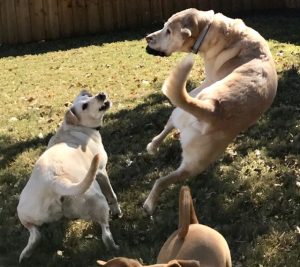
 “Gracie is doing great. She now stands on her hind legs to look over fences. It was something she used to do and it hadn’t dawned on me that she had stopped until she started looking over a wood fence for Annie (Bulldog) when we go on our walks. She sometimes jumps off our front porch and back on instead of using the step and she flies up and down stairs in the house. She will stand on her hind legs and does a dog paddle when I ask her ‘what do horses do’ and sits on her bottom (with front legs off the ground) and dog paddles when I ask her to ‘sit pretty’ and ‘sit pretty patty cakes’. I had stopped asking her to do these tricks since it became obvious that she didn’t want to do them, but now she will start the trick before I finish the question. She oozes happy . . . which makes us very happy.”
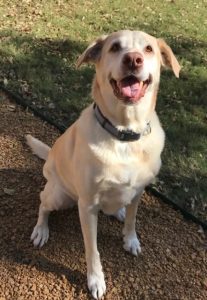 Stuart is a fun-loving Labrador that, like most Labs, loves to play fetch. In 2017, when Stuart began showing signs of an injury, his owner, Cynthia, took him to her veterinarian, Dr. Cindy Echevarria at