If you’re a dog owner, chances are you’ve heard the term “hip dysplasia.” According to the American College of Veterinary Surgeons, “Canine Hip Dysplasia (CHD) is a condition that begins in dogs as they grow and results in instability or a loose fit (laxity) of the hip joint.” Essentially, the ball of the hip joint doesn’t fit properly into the socket, causing abnormal movement, which results in cartilage degeneration, scar tissue formation, and bone spurs around the joint. As you can imagine, this is a painful condition that ultimately leads to osteoarthritis.
In many cases, surgery is the recommended treatment for hip dysplasia, but this option comes with its own challenges. Surgery can be invasive, expensive, and unfortunately, many dogs still develop scar tissue and arthritis over time. Another potential treatment option is stem cell therapy. While stem cell therapy won’t cure hip dysplasia, stem cells can help to reduce the pain and inflammation associated with arthritis. Stem cells also have the unique ability to differentiate into numerous tissue types, potentially aiding in the regeneration of damaged cartilage. These combined effects can lead to increased mobility and an improved quality of life for dogs with hip dysplasia and arthritis.
Given the prevalence of hip dysplasia and arthritis in dogs, numerous veterinarians have successfully treated thousands of dogs with these conditions using VetStem Cell Therapy. And many have seen great results! One example is Artemis, a Bernese Mountain Dog, with bilateral hip dysplasia. Fortunately for Artemis, her owner sought treatment early and her veterinarian recommended VetStem Cell Therapy.
After receiving stem cell therapy, Artemis’ owner shared, “I can see improvement as she stands from lying down, as well as after extended play or walks. My hope is with continued stem cell treatments she will stay comfortable longer.” You can read Artemis’ VetStem success story here.
VetStem’s ability to cryopreserve and store stem cells from each patient is particularly valuable for patients like Artemis who will never have perfect hips. With additional cells in her cryobank, Artemis can receive a lifetime of future treatments using her own stem cells without the need for additional fat collection procedures.
If your dog is struggling with hip dysplasia or osteoarthritis, stem cell therapy may offer a promising path toward relief. In fact, surveys from both dog owners and veterinarians show that over 80% of dogs experienced an improved quality of life following treatment with VetStem Cell Therapy for osteoarthritis. Additionally, a peer-reviewed study of dogs with chronic osteoarthritis of the hip found that treatment with stem cells reduced pain and lameness.
Contact us today to find a VetStem provider near you.
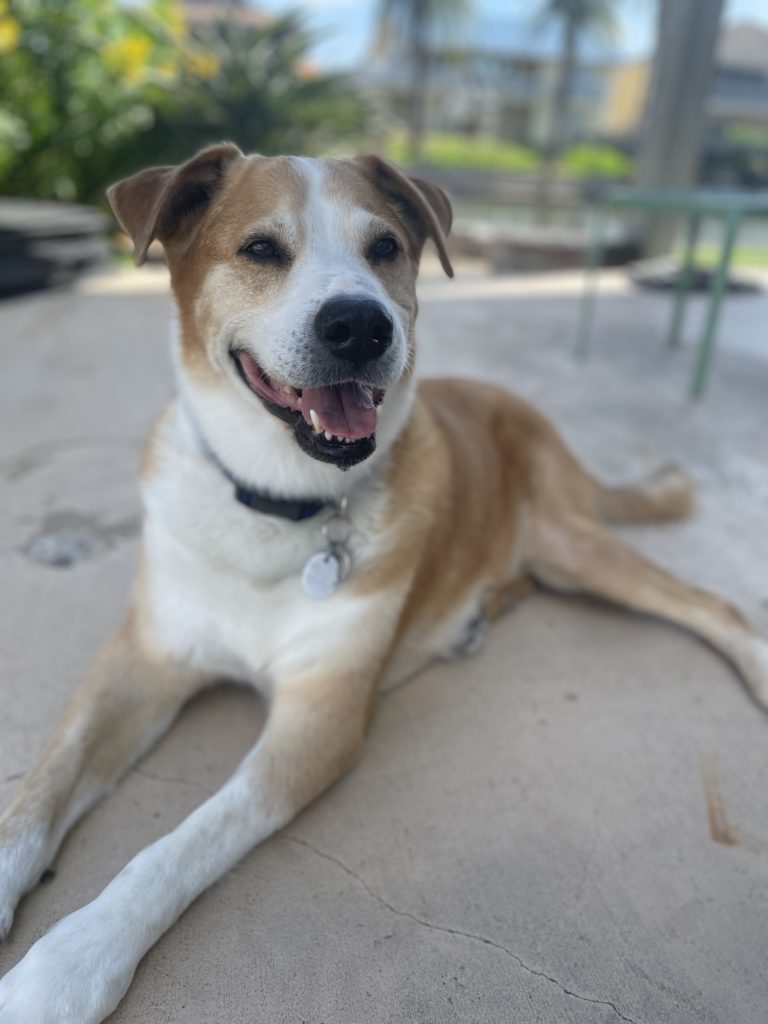
Biscuit, an Australian Cattle Dog mix, was struggling due to pain in both of her back legs. Diagnosed with a cruciate ligament tear in her right knee and arthritis in both hips, Biscuit’s owner was looking for a solution to help her dog live a better quality of life. After consulting with Dr. Kim Carlson, a board-certified surgeon and owner of Lenity Vet Specialists, it was decided that surgery would help to stabilize Biscuit’s knee, and VetStem Cell Therapy would be incorporated into her treatment plan to support her overall healing and pain management.
Dr. Carlson, who has been utilizing VetStem Cell Therapy for over 15 years, began the process by collecting a sample of Biscuit’s fat tissue during knee surgery. The fat was sent to the VetStem laboratory where stem cells were extracted and concentrated. Within 48 hours, Biscuit received multiple stem cell injections into her knee, both hips, and intravenously. Her extra stem cells were cryopreserved for potential future use.
Since her initial treatment, Biscuit has received annual follow-up injections from her stem cell bank to help manage her arthritis. The results have been nothing short of remarkable. Biscuit’s owner reported that within just a week of her last injection, “she was running up stairs and acting years younger.”
Osteoarthritis is a common condition that impacts dogs’ quality of life, but VetStem Cell Therapy can be an effective option for improving mobility and reducing pain. VetStem Cell Therapy leverages the body’s natural healing ability, helping to reduce inflammation, alleviate pain, and regenerate damaged tissue, offering significant benefits for dogs with conditions like osteoarthritis. In fact, more than 80% of dogs treated with VetStem for osteoarthritis showed a better quality of life, making it a promising solution for pets like Biscuit.
If you think your dog would benefit from treatment with VetStem Cell Therapy, contact us to receive a list of VetStem providers near you.
Cooper is a lovable Labrador who faced some serious health hurdles. Diagnosed with bilateral elbow dysplasia as a puppy, his journey was marked by joint pain that eventually led to osteoarthritis. For years, his owner managed his condition with medications and supplements, but at 8 years old, Cooper started limping badly. His vet recommended treatment with VetStem Cell Therapy in an effort to reduce pain and inflammation and promote healing.
The process started with a quick, minimally invasive procedure where Cooper’s vet collected some fat from his abdomen. That fat was sent off to our lab in Poway, California, where our team worked to extract and concentrate Cooper’s stem cells. Just 48 hours later, Cooper had both of his elbows injected with his own stem cells.
Just one week post-treatment, Cooper stopped limping, and after a month, he was off his anti-inflammatory meds. His owner couldn’t be happier, stating, “He seems happy and thriving. We slowly increased our walks again and happy to report he can walk 3-4 miles a day without any consequence. He also loves going back to hiking. Stem cell therapy brought my happy boy back. Thank you.”
But the story doesn’t end there. We also cryo-preserved some of Cooper’s stem cells for future use, ensuring that he’ll have access to treatment whenever he needs it. Cooper’s journey shows just how powerful stem cell therapy can be in giving our furry friends a second chance at life. Here’s to many more happy, pain-free adventures for Cooper
If you think your pet may benefit from treatment with VetStem Cell Therapy, contact us to find a VetStem provider near you.
Meet Teddy, the adorable Chow Chow/Husky mix who loves to play but faced a tough battle with severe arthritis in his right hip. Getting up from a lying down had become a struggle, and his family was worried. Luckily, they turned to Dr. Mitch Luce at Live Oak Veterinary Hospital, who offered them a couple of treatment options: hip replacement surgery or VetStem Cell Therapy. Teddy’s owners opted for the stem cell therapy, hoping it would be a gentler route for their aging buddy.
To begin the process, Dr. Luce collected a small sample of fat from Teddy’s abdomen. The fat was then sent off to VetStem’s lab for processing. Just 48 hours later, Teddy received his first injection of his own stem cells directly into his hip, along with an IV dose.
Fast forward five months, and Teddy is thriving! His owner can’t believe the transformation: “Remarkable recovery!! He runs, jumps, and plays with our other dogs and can get up from a down position easily. He does every once in a while have a slight limp issue but only after playing or running way too hard. And that is progressively getting better as well. So glad we chose VetStem Cell Therapy for him!” The difference is so impressive that they even shared a before-and-after video to showcase Teddy’s amazing comeback. Check it out here: https://www.youtube.com/watch?v=eXpmwHD37XE
Arthritis is a common issue for many dogs, and it can really impact their quality of life. But innovative treatments like VetStem Cell Therapy provide hope for your furry friend. Stem cells can help reduce pain, improve mobility, and help to regenerate damaged tissues. According to surveys, over 80% of dogs treated with VetStem report a better quality of life, so it’s no wonder Teddy’s family is over the moon with their decision. Here’s to many more happy, pain-free adventures for Teddy!
July 21st is World Collie Day so we thought it fitting to share Casey’s VetStem success story. Casey is a Rough Collie who began experiencing symptoms of Inflammatory Bowel Disease when he was around 4 months old. At first, he was not eating regularly. This was followed by frequent bouts of diarrhea and vomiting. After trying multiple diets and medications with no success, numerous diagnostics including X-rays, bloodwork, ultrasound, and biopsies of his GI tract led to a diagnosis of Inflammatory Bowel Disease (IBD).
IBD is a gastrointestinal disease that can affect both dogs and cats. It is characterized by inflammation of the intestines and can cause vomiting, diarrhea, reduced appetite, and weight loss. IBD can be a frustrating disease because a definitive diagnosis can be time-consuming and costly, traditional treatments are life-long and can be complex, and the animal often continues to experience symptoms of the disease despite treatment.
Though Casey was on a special diet and multiple medications, his symptoms were minimally controlled. This went on for about three years until his bloodwork revealed elevated liver enzymes, which was a result of his steroid medication. It was at this time that his veterinarian recommended treatment with VetStem Cell Therapy.
Stem cells have demonstrated the ability to down regulate inflammation, modulate the immune system, and repair damaged tissue. Multiple animals have been treated with stem cell therapy for IBD and experienced a relief in symptoms and an improved quality of life. After some research, Casey’s owners agreed to move forward with VetStem Cell Therapy.
To begin the process, Casey had fat collected from his abdomen in a minimally invasive anesthetic procedure. The fat was aseptically packaged and shipped to the VetStem processing laboratory. Lab technicians processed the fat to isolate and concentrate the stem and regenerative cells contained therein. Therapeutic doses were then prepared for treatment.
Over the course of 10 months, Casey received 5 separate intravenous doses of his own stem cells. According to his owner, his symptoms improved greatly. He began interacting more and playing with his family and other dogs. He started rolling over for belly rubs, which he had not done in the first 3 years of his life. His appetite improved and he was able to get off all but one of his medications, including being completely off steroids. He has occasional IBD flare ups but nothing to the degree he experienced previously.
Approximately 15 months after his 5th stem cell treatment, Casey received a 6th intravenous dose (along with intra-articular doses to treat a few arthritic joints) and hasn’t required additional treatments for over year now. He does, however, have numerous doses left in his stem cell bank, should he ever require future treatments.
If your pet has Inflammatory Bowel Disease, speak to your veterinarian or contact us to find a VetStem provider near you.
Happy National Dachshund Day! In this week’s VetStem blog, we’re sharing the stem cell success story about a Doxie named Floppy who was suffering from severe arthritis in his hips and knees. In a video his owner shared with us, Floppy showed extreme difficulty getting up from a down position and moved very slowly. His owner also stated that he limped and was very stiff.
Floppy was 8 years old when his veterinarian recommended treatment with VetStem Cell Therapy. To begin the process, his vet extracted fat from his abdomen during a minimally invasive anesthetic procedure. The fat was shipped to the VetStem laboratory where lab technicians extracted and concentrated Floppy’s stem and regenerative cells. Five stem cell injections were prepared and shipped to Floppy’s veterinarian for treatment. He received one injection into each hip, each knee, and an intravenous injection.
Floppy’s results were really remarkable. His owner stated, “We are extremely pleased with the results. The level of pain/stiffness decreased dramatically. It’s almost like he’s a puppy again! There is a night and day difference in his ability to move and perform everyday tasks.” His owner also sent a video of Floppy after the treatment with VetStem Cell Therapy and well…you just have to see it to believe it. Check out a short video detailing Floppy’s story here: https://www.youtube.com/watch?v=sJRUBYyDtqw
If you have a dog who suffers from arthritis, VetStem Cell Therapy may help. Speak to your veterinarian or contact us to receive a list of VetStem providers near you.
August 4th is Assistance Dog Day and next week is International Assistance Dog Week. This is a time to recognize and honor the hard work and selfless love that assistance dogs provide day in and day out. As you probably know, assistance dogs are specially trained to perform specific tasks for people with disabilities. These disabilities can be physical, sensory, psychiatric, intellectual, or mental. There are many types of assistance dogs including guide dogs for the blind, medical and hearing alert dogs, mobility assistance dogs, and more. In this week’s blog, we are going to share a special story about a psychiatric service dog named Max.
Max
Max has been a trained companion for U.S. Army Staff Sergeant Edward Johnson since 2014. Sgt. Johnson, a purple heart recipient, was shot in the head during combat in Iraq in 2006 and was left with a traumatic brain injury. Max helps Sgt. Johnson cope with PTSD and other debilitating ailments related to his injuries.
Unfortunately, Max tore his cruciate ligament in his knee. As a common injury in large breed dogs, cruciate ligament tear is one of the biggest reasons for hind limb lameness, pain, and subsequent knee arthritis in dogs. Additionally, according to the American College of Veterinary Surgeons, 40-60% of dogs who injure one cruciate ligament will go on to injure the other cruciate ligament in the future.
Max was obviously in pain and in need of surgery and other medical procedures. Fortunately, his story made the news and through donations and good will, Max was able to have surgery and treatment with VetStem Cell Therapy. His surgeon, Dr. Jeff Christiansen of Superior Veterinary Surgical Solutions, donated his services and organized donations from several others as well. As an experienced VetStem provider, Dr. Christiansen recommended stem cell and platelet therapy in conjunction with the surgery to aid Max’s healing. VetStem provided a free platelet therapy kit as well as discounted stem cell processing services.
According to Dr. Christiansen, Max recovered completely. But as is common, Max suffered a second cruciate ligament rupture in his other leg just over two years after his first surgery. Once again, Dr. Christiansen and several companies, including VetStem, stepped up to provide this dog with top-notch care. Max received surgery on his other knee in addition to stem cells and platelet therapy. Max once again recovered well and hasn’t required a repeat stem cell treatment since.
A sad story that we hear a lot is when a ball-loving dog is no longer able to play fetch due to arthritis or some other orthopedic injury. That was the case for Sherlock, a nearly 100-pound Staffordshire terrier/rottweiler mix. Though Sherlock loved to chase his ball, as he got older, his body started slowing down and he was diagnosed with arthritis in all four limbs. In an effort to not take away his favorite activity, his owners continued to play ball with a little less intensity. And then he tore his cruciate ligament in his right knee.
Fortunately for Sherlock, his veterinarian recommended using VetStem Cell Therapy in conjunction with surgery. Stem cells have the ability to reduce pain, inflammation, and minimize the formation of scar tissue. In addition to his injured knee, Sherlock’s veterinarian treated both of his elbows and his non-injured knee to give him some relief from the arthritis in those joints.
Sherlock
Sherlock’s owner reported that he responded well to his initial stem cell treatment but that shortly after, he injured the cruciate ligament in his left knee. Unfortunately, this is more common than you may think. According to the American College of Veterinary Surgeons, 40-60% of dogs who injure one cruciate ligament will go on to injure the other cruciate ligament in the future. This time, Sherlock’s veterinarian was able to request doses from his stored stem cells, which she administered during the surgery on his left knee. Sherlock once again received an injection of his own stem cells into each knee and each elbow.
After treatment, his owner said that his recovery went from six weeks to three-and-a-half weeks. She stated, “He healed so quickly that it surprised everyone. He was 12 years old by this time and a full recovery seemed almost too hopeful to wish for, but instead we not only got a full recovery but a faster recovery than before.” She went on to state, “Sherlock is now 13 years old and we do not run and chase balls anymore, but we enjoy walks on the beach and lots of snuggles and I am so grateful that he is still here feeling good and enjoying life with me. Stem cell therapy made an immense difference in his ability to live a high quality life in his older years.”
Does your dog suffer from osteoarthritis or have they injured their cruciate ligament? If so, VetStem Cell Therapy may help. Speak to your veterinarian or contact us to receive a list of VetStem providers near you.
As you probably know, much of the VetStem blog is spent discussing the treatment of arthritis with stem cells. We talk about things like joint dysplasia and cruciate ligament tears as catalysts for the development of arthritis. In today’s blog, we are discussing Fragmented Coronoid Process, or FCP, a developmental defect that causes arthritis in the elbows.
Nikolai Augustus, a Labrador retriever, was 2 years old when he began limping. X-rays revealed he had broken bone fragments in both of his elbows as a result of fragmented coronoid process, or FCP. FCP is one of the main diseases associated with elbow dysplasia. It is a developmental defect of the two small bony protrusions on the end of the ulna, known as the coronoid processes, within the elbow joint. In this condition, one of the bony protrusions develops a fissure or crack and separates from the ulna. FCP may result in instability and pain as well as decreased mobility and swelling.
The treatment of choice for FCP is surgical removal of the bone fragments and any abnormal cartilage. This procedure can be performed arthroscopically by an orthopedic surgeon, which results in a smaller incision and less damage to the supporting elbow structures. In all cases however, regardless of surgical repair, the patient will develop some degree of arthritis. That’s where VetStem comes in!
Niko
Niko’s veterinarian recommended arthroscopy in addition to treatment with VetStem Cell Therapy. Stem cells are regenerative cells that can differentiate into many tissue types and have demonstrated the ability to reduce pain and inflammation, help to restore range of motion, and stimulate regeneration of tendon, ligament, and joint tissues. By using VetStem Cell Therapy in conjunction with surgery, Niko’s vet hoped to delay the progression and reduce the severity of degenerative joint disease in his elbows.
To begin the process, Niko’s vet collected fat tissue from his abdomen in a minimally invasive anesthetic procedure. The fat was aseptically packaged and shipped to the VetStem processing laboratory in Poway, California. Lab technicians processed the fat to extract and concentrate the stem and regenerative cells contained therein. The cells were divided into doses, and two injectable doses were shipped to Niko’s vet for treatment. Approximately 48 hours after the initial fat collection procedure, Niko received one dose of his own stem cells into each elbow.
According to Niko’s owner, he had a great response to the treatment. His owner stated, “One year after surgery and stem cell therapy and Niko is running and playing with the energy of a 3-year-old. We are thankful our vet recommended stem cell therapy for Niko and that he has the bank of stem cells to help treat Niko in the future.”
In addition to the two stem cell doses that were shipped for immediate treatment, several doses of Niko’s stem cells were put into cryopreservation. This is particularly valuable for a patient like Niko who will never have perfect, arthritis-free elbows. In fact, approximately 15 months after his initial treatment, Niko received a follow up treatment identical to his first using some of his banked stem cell doses. Niko’s additional cells will remain in cryopreservation and can be accessed for treatment as needed for the remainder of his life.
If you think your pet may benefit from treatment with VetStem Cell Therapy, contact us to receive a list of providers in your area.
In last week’s VetStem blog, we introduced you to veterinarian and stem cell therapy proponent, Dr. John Hutchens. Dr. Hutchens shared his thoughts and experiences regarding the use of VetStem Cell Therapy in his patients. Check it out if you haven’t already, it’s a good one with lots of great information.
This week, we are sharing the experience of one of Dr. Hutchens’ VetStem patients, Holly. Holly is a chocolate Lab that received VetStem Cell Therapy for osteoarthritis in her hips and knees. Her owners kept a near daily journal of her treatment and initial progress. It’s rare that we get such a glimpse into the stem cell recovery process, so we wanted to share this with you! Check it out below.
Tuesday, July 25, 2022
Holly, our 11-year-old Labrador Retriever, had surgery today to remove a small amount of adipose tissue (fat) from her abdomen. It was sent to VetStem in California and should arrive there tomorrow. VetStem will isolate the stem cells and prepare 5 shots for Holly, one for each hip and one for each knee, and one IV. The rest will be stored by cryopreservation for future use. Stem cells are used for regenerative purposes in dogs, cats, and horses. VetStem will send the shots and IV back to my vet on Thursday for injection Friday morning if all goes well.
Friday, July 28
When we arrived at the vet at 8:00 am, we were told the shipment had been delayed in Indiana and was not there yet. My vet, Dr. Hutchens, had already talked to VetStem and they assured him it would be here first thing this morning. Since the cells are viable for 48 hours after shipping, if we had to, we could wait and do the procedure Saturday morning. He was willing to come in on a Saturday if they didn’t show up this morning. He is awesome. This was a minor blessing because Holly had developed diarrhea Wednesday evening and it gave the vet time to give her some meds to settle her stomach and start an IV to hydrate her. We left Holly at the vet and prayed the shipment would arrive soon.
Holly received an injection of her own stem cells into her hips and knees
Around lunch time we got a call from the vet. The shipment had arrived right away. Holly had already gotten her injections and IV and we could pick her up at 4:30. She was bright, perky, and ready to go home. She had a lot of swelling from the injections, and she was very sore on her back legs. She looked like a checkerboard where her hair had been clipped for her surgery and from her shots. She woke up twice that night and had to be helped up so she could go out to relieve herself.
Saturday, July 30
Her legs are still very sore. She is having difficulty getting up off the floor. We don’t have carpet and she slips when trying to get up. I’ve had to lift her up several times when she needed to get up. She slept all night.
Sunday, July 31
Holly is getting up easier today. In the morning she was stiff and had a hard time getting up but this afternoon she is getting up on her own and walking more.
Monday, August 1
Holly is so much better today. She can get up on her own and trots down the hall, instead of walking! She goes up and down her outside ramp with ease. This afternoon I rolled her ball about 10 feet and she actually ran after it. She is as good as, and maybe slightly better than she was before all this.
Tuesday, August 2
Wow, Holly went for a walk around the back pasture with Don (husband). Normally, she would go halfway around the acre, and stop while he finished his walk. Today, she walked around it 5 times! She hasn’t done that in about a year. I’ve cut back on her pain meds. Before all this, she was on 1.5 Rimadyl tablets and 2 Gabapentin capsules every day. She is only on 1 Rimadyl tablet and 1 Gabapentin a day now.
Wednesday, August 3 and Thursday, August 4
Holly continues to improve. It’s been a while since she would sit up and now, she is sitting again instead of lying on the floor all day. Unfortunately, that means she is begging for food. LOL. She has more energy, less pain, and is much happier. Her quality of life is so much better now.
Friday, August 5
We took her back to the vet to have her stitches out. The vet was amazed at how much better she was. She went from not being able to get up on her own, to getting up by herself, trotting down the halls. She is going up and down her ramp with ease, sitting up and being happy again! I recommend stem cell therapy to anyone who has a dog, cat, or horse that has health problems that this could fix. It’s a regenerative medical therapy that will enable the body to repair, replace, restore, and regenerate damaged or diseased tissues using its own cells.
Monday, August 8
Today Holly ran from the living room to the side door and barked when Robin came over and rang the doorbell. She commented that Holly had not done that in quite some time. This is so awesome.
Friday, August 12
Holly ran about 3 feet today. We threw (rolled) a ball about 5 feet and she ran after it. It didn’t last long but she actually ran a little.
Holly
August 16 & 18. This is week 3.
This is amazing. Robin threw Holly’s ball about 50 feet. Holly took off running as fast as she could (not very fast), trying to catch it. It’s crazy how much she has improved! She tried going down the deck stairs but fell at the bottom. She is still not quite strong enough to use the stairs going down all the time. She still mostly uses the ramp. We changed her meds to 1.5 Rimadyl only. We think the Gabapentin was causing her diarrhea.
August 24 & 25
Holly woke up wanting to play! She playfully growled and barked and tried to grab Don’s hand while squirming around in her bed and wagging her tail. She loves playing with him and never bites. LOL. When we opened the gate to the front pasture, she ran about 50 feet to meet Abby, Robin’s dog. They bounced around for a minute, then each went their own way sniffing everything they could find. She is actually interested in being outside now instead of lying around in the house all day. The next morning, she was stalking squirrels. She ran half the yard’s length then slowed down to a walk when the squirrel climbed a tree. She found one of her beloved balls and carried it around with her for half an hour before going back in the house. I can’t believe how much energy she has now.
September – Week 1
Holly has started using our deck stairs to go down to the yard again! Before, she would use her ramp which has roofing shingles tacked on it so she wouldn’t slip. Now, she is strong enough that she doesn’t fall at the bottom step anymore. She still uses the ramp to get back up to the deck.
September – Week 2 (approx. 45 days after treatment with stem cells)
Holly ran all the way across our back yard this week. That’s about 100 feet! I also noticed that she has started jumping up and down a little when she gets really excited or someone comes to the house. These stem cells seem to still be working. I wonder what it could do for me. LOL. It’s like the Fountain of Youth!
As you can see, VetStem Cell Therapy helped Holly live a better quality of life. At 11 years old with osteoarthritis in multiple joints, the treatment didn’t make her like a puppy again. But it did help her get moving so she could get back to some of her favorite things in life like playing with her ball, walking with dad, stalking squirrels, and greeting visitors. If you think your dog may benefit from treatment with VetStem Cell Therapy, speak to your veterinarian or contact us to receive a list of VetStem providers near you.